Smart Beds 101: How They Work, Benefits, and Which Models Are Worth Buying
Smart beds are no longer a novelty — they combine sensors, adjustable chambers, and active climate systems to solve real sleep problems. This guide breaks down how those technologies work, which benefits are supported by evidence, and the trade-offs to expect. You will get the feature checklist that matters, five model recommendations across budgets and use cases, and practical setup, privacy, and maintenance steps to buy confidently.
How smart beds work at a system level
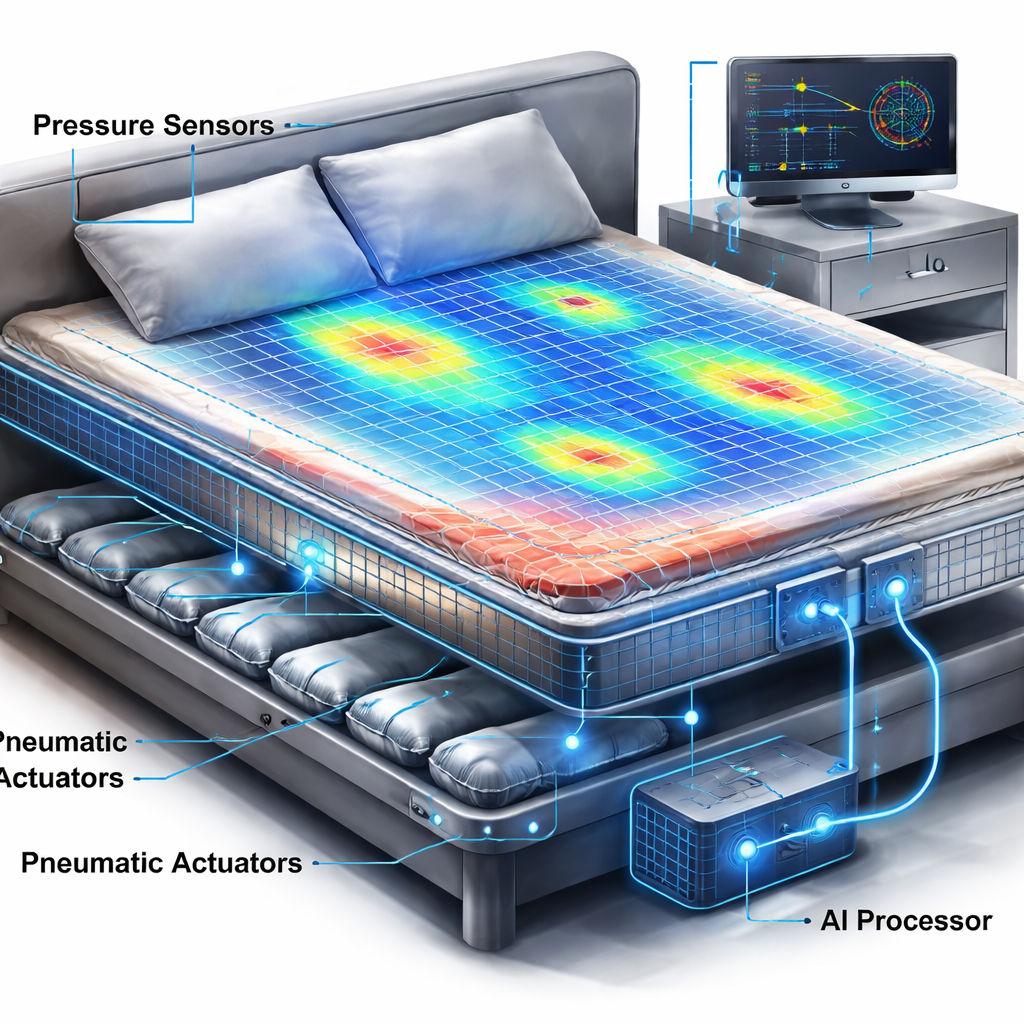
Smart beds are closed loops, not just mattresses with sensors. Sensors observe physiology and position, actuators change the physical mattress state, and software closes the loop with rules or machine learning. What matters in practice is how those three layers are designed to work together — sensor reliability, actuator durability, and where the compute happens (local or cloud) determine real-world performance.
Core sensors and what they actually measure
- Load cells / force sensors: measure weight distribution and gross movement; excellent for time-in-bed and partner disturbance detection but limited for fine cardiac signals.
- Ballistocardiography (BCG) sensors: pick up micro-vibrations from heartbeat and respiration when embedded in mattress layers; good for heart/resp trends, weaker for definitive sleep stage scoring.
- Pressure mats / air-chamber pressure sensors: map pressure points and enable zonal firmness control; useful for targeted relief but sensitive to mattress cover and bedding.
- Piezoelectric and conductive thread arrays: low-profile options for motion and heartbeat detection; cheaper but noisier data that needs heavier filtering.
Actuators, climate systems, and mechanical trade-offs
Actuators vary by approach and failure mode. Air chambers use pumps and valves to change firmness precisely but are mechanical — expect pump noise and eventual wear (5–10 years). Adjustable bases use DC motors with predictable lifespans but limited zoning. Active climate systems use fluid loops or Peltier modules; fluid loops cool/heat efficiently but add plumbing and a pump to maintain, while Peltier units are quieter but less powerful and more power-hungry.
Software, connectivity, and the control loop
Software does three jobs: signal processing, decision logic, and user interface. Raw sensor data must be filtered and fused (for example combining BCG with load cell data to reduce false positives). Decision logic ranges from simple rule-based (raise firmness when restless) to machine learning personalization. A critical practical difference is where inference runs: on-device reduces latency and privacy risk but is rare; cloud allows heavier models and remote updates but adds latency, dependence on servers, and data-sharing concerns.
Concrete example: The Eight Sleep Pod Pro uses mattress-embedded temperature sensors and BCG-derived heart/respiration trends to drive a fluid-based thermal loop that heats or cools mattress zones. The system monitors sleep stage proxies and shifts zone temperature proactively — that reduces awakenings for users who wake from temperature changes, but it also means you depend on the pump and app connectivity to get the benefit. See Eight Sleep for details: Eight Sleep Pod Pro.
Practical trade-off: prioritize actuator reliability and modular serviceability over marketing claims about AI; a well-documented pump or replaceable thermal module will save far more downtime than a marginally better sleep-stage algorithm.
Market context: the smart bed market is growing rapidly — estimated at USD 2.2 billion in 2020 with continued expansion — which means more models but also varying quality and warranty approaches. Grand View Research
Final technical judgment: when evaluating smart beds, read sensor specs (sampling rate, placement), pump/motor noise figures, and the vendor’s firmware update policy. If you rely on health metrics, pick models that expose raw data or sync with third-party apps; otherwise choose the model with the clearest service path and documented replacement parts. For setup and maintenance guidance, consult this maintenance guide.
Key features to evaluate before buying a smart bed
Buy with a checklist, not a demo video. Manufacturers pile features into product pages; what separates useful smart beds from gimmicks is how those features perform together under everyday conditions — during a restless night, while two people share the bed, and after a year of use.
A practical verification table
| Feature | What to verify in specs | What to test during the trial |
|---|---|---|
| Sleep-tracking outputs | Which raw metrics are exposed (heart rate, respiration, movement), sampling frequency, and export options (Apple Health/CSV). | Compare nightly totals against a watch for time in bed and notable events; ignore claimed stage-by-stage scoring unless vendor provides validation. |
| Active temperature control | Number of zones per side, cooling wattage or BTU-equivalent spec, and stated response time. | Run a rapid-cool or rapid-heat routine and time how long the surface feels different; listen for pump or fan noise at night volume. |
| Adjustability and firmness | Air chamber resolution (psi steps or percentage), per-side independence, and automatic presets. | Try presets and make small increments; check whether automatic adjustments undo manual settings mid-night. |
| Serviceability and warranty | Separate coverage for electronics, pumps/motors, and mattress materials plus availability of replacement modules. | Ask support how they handle pump failure and request service timeline in writing. |
| App and integrations | Third-party sync (Apple Health, Google Fit), local vs cloud processing, and data retention policy. | Inspect the app for export functions and test pairing with your phone and any smart home hubs you use. |
Trade-offs that actually matter: high cooling power reduces thermal wake-ups but increases noise and power draw; fine-grain air adjustments give better partner compromise but add mechanical parts that fail sooner. Pick which downside you tolerate.
- Noise vs performance: stronger pumps and fluid loops cool faster but can be audible under blankets.
- Modularity vs integration: replaceable pumps or control modules extend usable life; fully integrated designs are neater but harder to repair.
- Cloud features vs privacy: vendor analytics can improve personalization but often mean physiological data leaves your home network.
Concrete example: If you and a partner sleep at different temperatures, a dual-zone system like the Eight Sleep Pod Pro will actively cool one side while heating the other; during a trial, run the rapid-cool routine on one side while the other side is idle and note the time-to-effect and whether the pump noise disturbs sleep. See the Pod Pro specs for performance details: Eight Sleep Pod Pro.
Prioritize measurable, testable claims — documented pump noise, exportable data, and explicit spare-part policies beat glossy AI buzzwords.
Before you buy, pull the vendor privacy policy and warranty PDF. If the company won’t confirm service turnaround for pumps or won’t allow data export, treat that as a reduced-value purchase. See our privacy checklist: Privacy and Smart Beds.
Next consideration: convert your priorities into two non-negotiables before comparing models — one functional (for example, dual-zone cooling) and one durability/service requirement (for example, replaceable pump covered by warranty). Use those to immediately screen out models that look good on paper but fail on the specifics you will live with nightly.
Evidence based benefits and real limitations
Evidence snapshot: Controlled studies and independent reviews show targeted benefits from smart beds — not blanket miracles. Temperature regulation demonstrably reduces sleep fragmentation for people who wake from thermal shifts, and adjustable air chambers reduce partner conflict by letting each side tune firmness. See the summary at Sleep Foundation for the underlying studies.
What the research reliably supports
Reliable gains are specific and measurable. Expect the clearest, repeatable improvements in three areas: sleep continuity when thermal control is used, reduced awakenings from partner movement with per-side adjustments, and localized pressure relief for pain sufferers when zonal air systems are tuned correctly. Consumer testing from outlets like Consumer Reports confirms mattress-based trackers also track time-in-bed and movement well — but not sleep stage details with clinical accuracy.
- Temperature control: improves sleep onset and fewer mid-night wakings for heat-sensitive sleepers; trade-off is increased noise and power draw from pumps or fans.
- Per-side adjustability: resolves many couple comfort disputes quickly, but air-based systems introduce long-term mechanical maintenance and potential mid-life replacement costs.
- Built-in tracking: useful for longitudinal trend spotting and behavioral feedback, yet not a substitute for polysomnography or medical diagnosis.
Practical limitation: Most consumer smart bed platforms process data in the cloud to power personalization. That produces better aggregate algorithms but creates latency, dependency on vendor servers, and increased privacy exposure. If you need clinically reliable metrics or want local-only processing, demand explicit export options and vendor documentation on where inference runs — ask before you buy.
Concrete example: A rotating-shift nurse with chronic night awakenings moved to a dual-zone cooling mattress and reduced wake-ups related to temperature swings within two weeks. The outcome depended on running the bed in active thermal mode and pairing it with a consistent bedtime routine; the bed helped, but behavior and schedule alignment were necessary for the effect to persist.
Common misjudgment: Buyers assume more sensors mean better results. In practice, sensor quality and algorithm transparency matter far more than sensor count. A single well-placed BCG strip with an open export option can be more valuable than a marketing-heavy array that hides raw data.
If the vendor won’t let you export data or won’t describe where their models run, treat that as a material downside — it limits clinical use and long-term portability of your sleep history.
Try an A/B approach during trials: run alternating nights with active smart features on and off. If you do not see a consistent, measurable improvement within the trial window, the incremental value of the smart features is low for your case — consider a conventional mattress or a simpler adjustable base.
Next consideration: If you fit the target profiles that benefit most — thermal sensitivity, partner mismatch, or chronic pressure issues — prioritize serviceability, documented noise specs, and data export over headline AI features. Those three practical checks separate useful smart beds from expensive novelties.
Who benefits most from a smart bed and who should avoid one
Straight answer: smart beds pay off when a specific, recurring sleep problem maps directly to a feature the bed actually solves — temperature swings, persistent partner conflict over firmness, or a need for targeted pressure relief. If you are chasing marginal nightly improvements or expect the bed to diagnose medical conditions, you will probably be disappointed.
Real-life scenarios where smart beds change outcomes
- Hot sleepers and thermal sensitivity: dual-zone active climate systems give measurable reductions in night wakings for people who repeatedly wake from overheating. The trade-off is more components to maintain and higher electricity use during heavy cooling cycles.
- Couples with mismatched firmness or temperature needs: per-side air chambers or independent climate zones resolve disputes quickly. Expect better nights, but plan for mid-life pump or valve service and validate the warranty before you buy.
- Chronic localized pain or pressure issues: targeted zonal inflation and pressure-mapping mattresses can reduce pressure points when tuned correctly. This works best with repeatable configuration and occasional retuning, not a one-time setup.
- Shift workers and fragmented schedules: features that speed sleep onset (temperature ramping) and supply reliable trend data for behavior change can be helpful. These gains require consistent use and willingness to use the app-driven coaching or routines.
Who should probably skip a high-tech bed: People on tight budgets who need a mattress replacement now, minimalists who do not want device upkeep, and anyone who needs clinical-grade diagnostics. Also avoid high-noise pump-based designs if you live in thin-walled apartments or have noise-sensitive partners.
Practical trade-off to weigh: choose between immediate comfort features and long-term serviceability. For example, an air-chamber system can give per-side customization today but typically introduces pumps, valves, and seals that may require paid service after several years. If you value low maintenance, pick simpler adjustable bases or mechanical split solutions instead.
Concrete example: A couple where one partner consistently wakes up sweating installed a dual-zone Pod Pro. The overheating partner went from multiple awakenings to a single brief adjustment most nights; the cooler side stabilized sleep onset. They did find the pump audible through a thin floor and solved it by moving the module into a ventilated closet and enabling scheduled cooldown only during core sleep hours.
Judgment that matters: most people who buy smart beds on a whim overestimate the tech and underestimate the lifestyle fit. The right purchase starts with a non-negotiable problem and two operational checks: can you tolerate the maintenance profile (noise, parts replacement) and will the vendor back repairs with clear timelines? If either answer is no, delay the upgrade.
If your main goal is a single functional win (cooler nights, one partner quieter, or targeted pressure relief), validate that feature in a trial first — otherwise the rest of the smart features are just expensive extras.
Before you buy, write down two non-negotiables: one functional (for example, dual-zone cooling) and one service-related (for example, replaceable pump covered by warranty). Use those to screen models quickly; see our step-by-step buying checklist at Buying Guide.
How to evaluate and buy: step by step checklist
Start as a system buyer, not a gadget buyer. Treat the bed, pump/module, app, and service pathway as one purchase. If any element lacks clear specs or a replacement plan, the whole system degrades over time.
- Set three purchase criteria. One functional (for example, dual-zone cooling), one durability (for example, replaceable pump within warranty), and one integration need (for example,
Apple Healthsync or Alexa voice control). If a model fails any of the three, move on. - Map features to measurable specs. Don’t accept fuzzy claims. Ask for cooling power (watts or BTU equivalent), number of independent zones per side, pump noise in dB at 1 m, air-chamber resolution (psi steps or percentage), and sample rate for heart/respiration sensors.
- Screen service terms. Get warranty PDFs that separate electronics, mechanical parts, and mattress materials. Confirm typical repair turnaround and whether spare parts are sold to end customers or only serviced by the manufacturer.
- Verify data access and processing location. Ask whether sleep inference runs on-device or in the cloud and whether you can export raw nightly data to CSV or sync with external apps. If you need clinical-grade history, cloud-only black-box analytics is a deal breaker.
- Run a structured trial. Use an A/B protocol: nights 1–7 baseline (no smart features), nights 8–14 smart features enabled, nights 15–21 tuned settings you expect to keep. Track two outcome metrics you care about (wake-ups and perceived sleep quality) and compare.
- Test installation and noise in situ. If delivery is white-glove, request the unit be set up in your bedroom and run cooling/pump cycles while you sit on the bed. Listen from the pillow position and adjacent rooms; measure annoyance, not just audibility.
- Confirm compatibility and logistics. Check frame clearance, power outlet placement, and whether adjustable bases need special rails. Ask about transferability of warranty if you sell the bed later.
- Plan for mid-life repairs. Before buying, note the exact part numbers for pumps/modules and whether the vendor sells replacements or only offers paid service visits.
Testing protocol that returns useful answers
Practical insight: a short, structured trial beats demos.** During smart-on nights, force the feature you bought to work (run rapid-cool, trigger auto-firmness) and score whether the outcome is worth the noise/power trade-off. If you cannot reproduce the benefit in the trial window, the feature is unlikely to justify the premium.
Concrete example: An audio engineer bought a premium temperature-control bed and found a low-frequency pump hum coupled with floor resonance. During the trial they placed the pump on a vibration-damping shelf and scheduled cooling only for core sleep hours; the modification eliminated the disturbance and preserved the thermal benefit. That adjustment required verifying spare-part access and scheduling — which they had confirmed before purchase.
30-day evaluation plan: Week 1 baseline, Week 2 enable smart features, Week 3 fine-tune presets, Week 4 replay worst-case scenarios (guests, heatwave) and decide. Keep screenshots of app settings and a short log — this evidence speeds support calls if something fails.
Judgment call to remember: prioritize replaceability and clear service SLAs over marginal algorithm differences. A model with a quieter pump and accessible spare parts will deliver more reliable sleep across years than a slightly smarter cloud model that leaves you stranded when a module fails.
Buy only after a replicable trial shows the feature improves the one sleep problem you actually have — otherwise the smart features are expensive extras.
Top smart bed models worth buying and when to choose each one
Straight to the point: pick a smart bed by matching the single problem you want solved to the model that solves it without creating new headaches. Below are five widely available systems, what they actually deliver in real homes, and the trade-offs you must accept.
Sleep Number 360 i10 — best for couples who want in‑store demos and predictable service
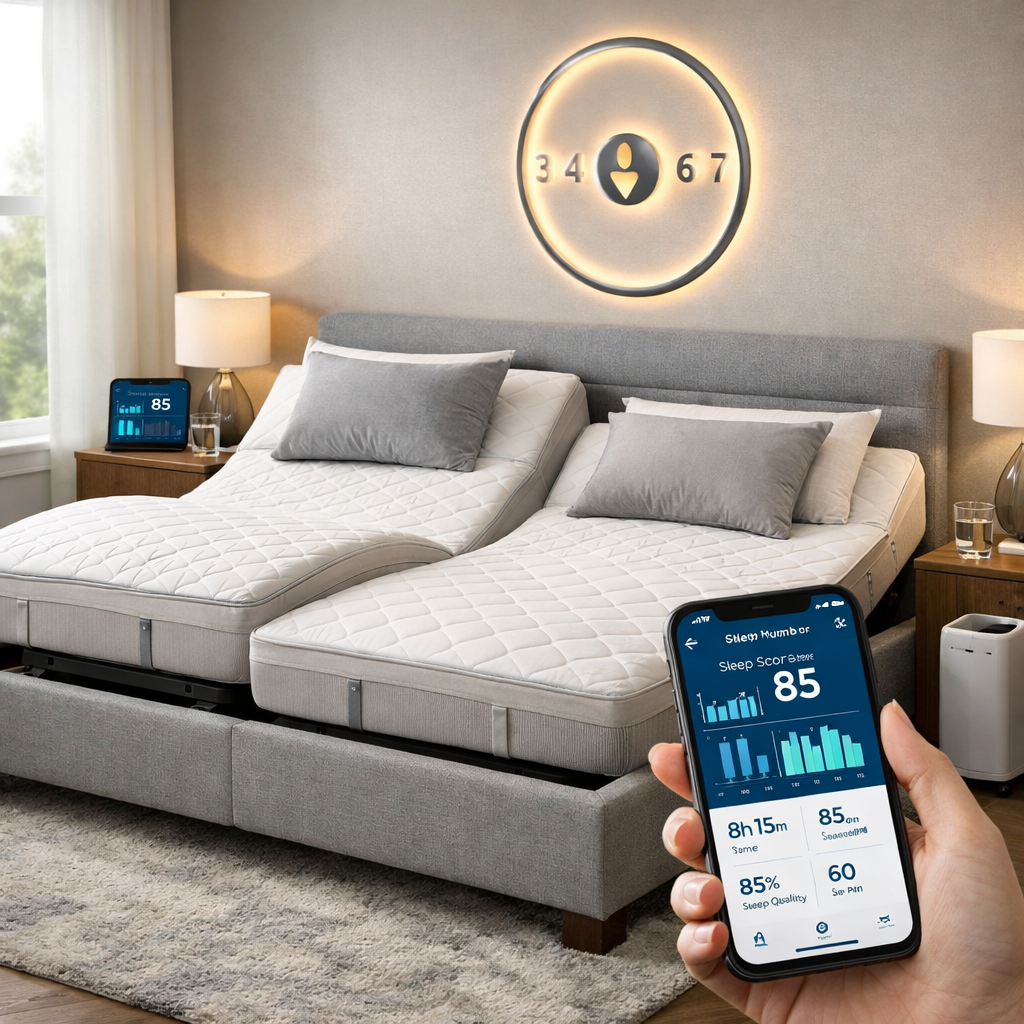
Why choose it: Sleep Number offers per‑side air firmness, integrated SleepIQ monitoring, and a nationwide retail/service muscle that matters for warranty claims and trials. In practice their sales-and-service chain reduces friction if you need pump replacement or a showroom test before buying. Trade-off: air systems add long‑term mechanical maintenance and the platform favors proprietary components.
Eight Sleep Pod Pro — best for hot sleepers and active temperature control
Why choose it: industry‑leading active thermal control with fast ramping and sleep‑stage aware routines. For people who wake repeatedly from temperature changes it delivers the largest, fastest effect. Trade-off: cooling performance often comes with a pump/module you must maintain and possible subscription gating for advanced features — check current service terms before committing. See Eight Sleep Pod Pro for specs.
ReST Performance Pro — best for precision pressure relief and clinical use
Why choose it: pressure‑sensing cover with zonal inflation lets you tune support dynamically for pressure ulcers and chronic localized pain. Clinics and people with targeted therapeutic needs will find measurable benefits when a clinician helps tune settings. Trade-off: this is a specialist purchase — expensive, requires retuning over time, and you should confirm clinical support or a trial with a therapist. See ReST Performance Pro.
Saatva Solaire — best if you want precise air firmness with a traditional mattress feel
Why choose it: Solaire combines adjustable air chambers with a luxury innerspring/comfort layering, so you get fine firmness control without the all‑foam feel. Trade-off: less aggressive thermal control than dedicated climate systems and similar pump/valve maintenance as other air mattresses; choose Solaire when mattress feel is as important as adjustability. See Saatva Solaire.
TempurPedic Ergo Smart Base paired with Tempur mattresses — best for base functionality and programmable positions
Why choose it: If you value a high‑quality adjustable base (programmable positions, anti‑snore tilt, built‑in massage) and already prefer Tempur material, this combo is the cleanest mechanical solution. Trade-off: you get base features more than mattress embedded sensing; add‑on sleep tracking is often base‑level or requires third‑party devices. See TempurPedic Ergo Smart Base.
| Model | Best for | Approx queen price | Key trade-off |
|---|---|---|---|
| Sleep Number 360 i10 | Couples who want showroom testing and broad support | $3,000–6,000 | Proprietary parts and air-system maintenance |
| Eight Sleep Pod Pro | Hot sleepers and tech-first temperature control | $1,800–3,000 (plus possible subscription) | Pump/module maintenance and potential subscription |
| ReST Performance Pro | Targeted pressure relief and clinical use | $6,000+ | High cost, needs professional tuning |
| Saatva Solaire | Luxury feel with precise firmness | $1,800–4,000 | Less active cooling; pump maintenance |
| TempurPedic Ergo Smart Base | Programmable base features and premium foam fans | $1,500–3,000 (base only) | Base-focused features, limited mattress sensing |
Concrete example: a couple with chronic temperature mismatch bought an Eight Sleep Pod Pro after a one‑week trial that included the rapid‑cool routine and nightly scheduling. The hotter partner stopped waking to adjust covers within ten nights, while the other partner reported no downside — but the couple repositioned the pump into a closet to remove a faint hum. That install decision required confirming spare‑part access and delivery timing prior to purchase.
Practical judgment: don’t be seduced by the most sensors or the biggest app dashboard. The best real‑world choice weighs three things: does this model fix the one problem you have, can the vendor service or replace mechanical parts quickly, and are ongoing software/subscription costs acceptable? If a vendor hides replacement part availability or keeps key features behind subscriptions, treat total cost of ownership as higher than sticker price.
If serviceability or quiet operation is non‑negotiable, screen models by pump noise specs and spare‑part policies before you look at advanced features.
Next consideration: run a focused trial that forces the feature you need (dual‑zone cooling, partner firmness split, or pressure relief). If the feature doesn’t reliably produce the desired effect during your trial window, that model is unlikely to justify its premium — consult our Buying Guide for a structured test plan.
Maintenance, security, and the future of smart beds
Maintenance and security are the real operating costs of smart beds. If you ignore both, a high-tech mattress becomes a high-maintenance liability: noisy pumps, flaky valves, or an unsupported cloud can erase the value of the features you paid for.
Practical maintenance regimen
Routine checks that save frustration. Do an app health check weekly (connection, firmware version, error logs), inspect visible tubing and connectors every three months for leaks or kinks, and run a pump self-test quarterly. Expect mechanical modules to need attention around year five — plan money and access accordingly.
What to budget for and why it matters. Cooling loops and air pumps are consumables: filters, seals, and valves wear. The trade-off is simple – stronger cooling and finer air control deliver better nights but increase service events and replacement costs.
- Quarterly: app diagnostics, visual tubing check, clear vents around pump
- Annually: firmware audit (and rollback option), tighten fasteners on adjustable bases, replace inline filters if present
- Every 3–7 years: expect pump or valve service; confirm part numbers and vendor lead times before buying
Security and data hygiene steps you must take
Treat your smart bed like any other medical-adjacent device. Review what the vendor collects, how long they keep it, and who they share it with. Prefer vendors that allow export and deletion of raw nightly data and that document whether processing happens locally or in the cloud.
- Network isolation: put the bed on a guest VLAN or IoT subnet and disable UPnP on your router
- Credentials: change default passwords, enable 2FA if offered, and rotate account credentials periodically
- Minimize sharing: turn off nonessential cloud features and revoke third-party app access you do not use
- Data requests: request an export and a deletion to confirm vendor compliance before purchase (see Privacy and Smart Beds)
Real trade-off: cloud analytics improve personalization but create vendor lock-in and privacy exposure. If the vendor folds, cloud-dependent features and historical sleep logs can vanish. Insist on local fallback modes and data export if continuity matters to you.
Concrete example: A buyer relied on cloud scheduling and app coaching for an active cooling mattress. When the vendor discontinued the subscription tier two years later, the bed still worked manually but lost scheduled ramps and historical trends. They retained usable comfort control but lost the behavioral coaching and long-term sleep history they had been tracking for a job-related sleep study.
What to expect next and how to position your purchase
Near-term shifts will determine longevity. On-device inference, standard sleep-data APIs, and modular, swappable pump/control units are where value will concentrate. Vendors that lock features behind subscriptions or do not sell replacement modules will increasingly be second-tier for anyone who wants a durable system.
Practical buying stance: favor models with documented spare-part lists, explicit offline capabilities, and clear firmware policies. That combination reduces your exposure to vendor churn and keeps the bed usable even if cloud services change.
Checklist before you buy: confirm (1) where inference runs (device or cloud), (2) part numbers and spare-part availability, (3) documented repair turnaround times, and (4) a privacy policy that permits data export/deletion. If a vendor refuses any of these, treat the purchase as higher risk.
Next consideration: Before signing, force-fail the feature that matters to you (run the pump at night, trigger scheduled cooling) during the trial and confirm the vendor’s repair promise in writing. That single step prevents most ownership regrets.
Frequently Asked Questions
Start point: most of the sensible answers in this FAQ reduce to three checks – does the feature produce a measurable improvement for you, can the hardware be serviced affordably, and do you control the data the system collects. If any of those fail, the smart features are likely to be a cost without long term value.
How accurate are mattress trackers versus wearables? Mattress sensors are strong at ambient, contactless trends: total sleep time, gross movement, respiration rate and night-to-night heart rate trends. They are weaker than ECG or chest straps for short arrhythmia detection and usually cannot be relied upon for clinical sleep staging. If you need clinical accuracy, export nightly raw data and compare it with a clinician grade device during an evaluation period.
Can a smart bed reduce snoring or treat sleep apnea? Positional elevation and incline presets can reduce positional snoring for many people and make CPAP therapy more comfortable by stabilizing sleeping posture. Smart beds are not medical devices for diagnosing obstructive sleep apnea. If you suspect apnea, get a sleep study and then use the bed as an adjunct – confirm that elevation presets are available and that the base will not interfere with a CPAP hose or lead routing.
What are the real privacy risks and how do I limit exposure? Physiological and usage data are attractive to third parties. Ask the vendor for a data processing addendum, request a schema of collected fields, and insist on the ability to export and delete your data. Place the device on a segmented IoT network and disable cloud features you do not need. Test export and deletion before the trial period ends.
How long do components last and what will repairs cost? Expect mechanical modules to need attention sooner than the comfort core. Typical lifetimes: pumps and valves 3 to 8 years, motors 7 to 12 years, mattress comfort layers 7 to 12 years depending on material. Budget roughly $150 to $600 for a replacement pump on many systems and demand exact part numbers and lead times from the vendor before purchase.
Will I need a special frame, and what about moving the bed? Some smart mattresses work on standard frames, others require specific adjustable bases or clearance for tubing and modules. If you plan to move residences, verify whether modules are user-removable and whether the vendor offers reinstallation service. A bed with modular, swappable parts is easier and cheaper to relocate.
Are advanced features behind subscriptions and do they transfer on resale? Many vendors gate sleep coaching, historical trends, and some automation behind subscriptions. Confirm which core functions operate without an active subscription and whether subscriptions are transferable if you sell the bed. Treat subscription dependence as a recurring cost that affects total cost of ownership.
Concrete example: A CPAP user paired an adjustable base with elevation presets to reduce residual snoring while maintaining CPAP mask seal. After a two week trial with exported usage logs, their sleep clinician verified improved compliance. The buyer validated compatibility with the CPAP hose and confirmed spare part availability for the base before final purchase.
Before you sign: (1) request a one time export and deletion of test data to confirm vendor compliance, (2) get part numbers and average service turnaround for pumps and motors, and (3) confirm which features work offline without a subscription. If the vendor will not provide these, the purchase carries material risk.
Judgment worth acting on: vendors with modular hardware and permissive data policies age better than vendors that lock features in the cloud or refuse to sell spare parts. Prioritize replaceability and data export over extra sensors or flashy dashboards.
Action to take now: during any trial run the feature you bought for at least one week, force the device to fail in controlled ways – unplug cloud sync, run a pump cycle at night, and verify vendor support responsiveness.
Concrete next steps you can implement: 1) Ask the vendor for a written service SLA and spare-part SKUs before purchase; 2) During trial follow a 7-7-7 plan – 7 nights baseline, 7 nights smart features on, 7 nights tuned settings – and capture screenshots of app states; 3) Run an export and submit a deletion request to confirm the vendor honors data control. Complete those three steps and you will either validate the bed for your needs or identify the model to avoid.