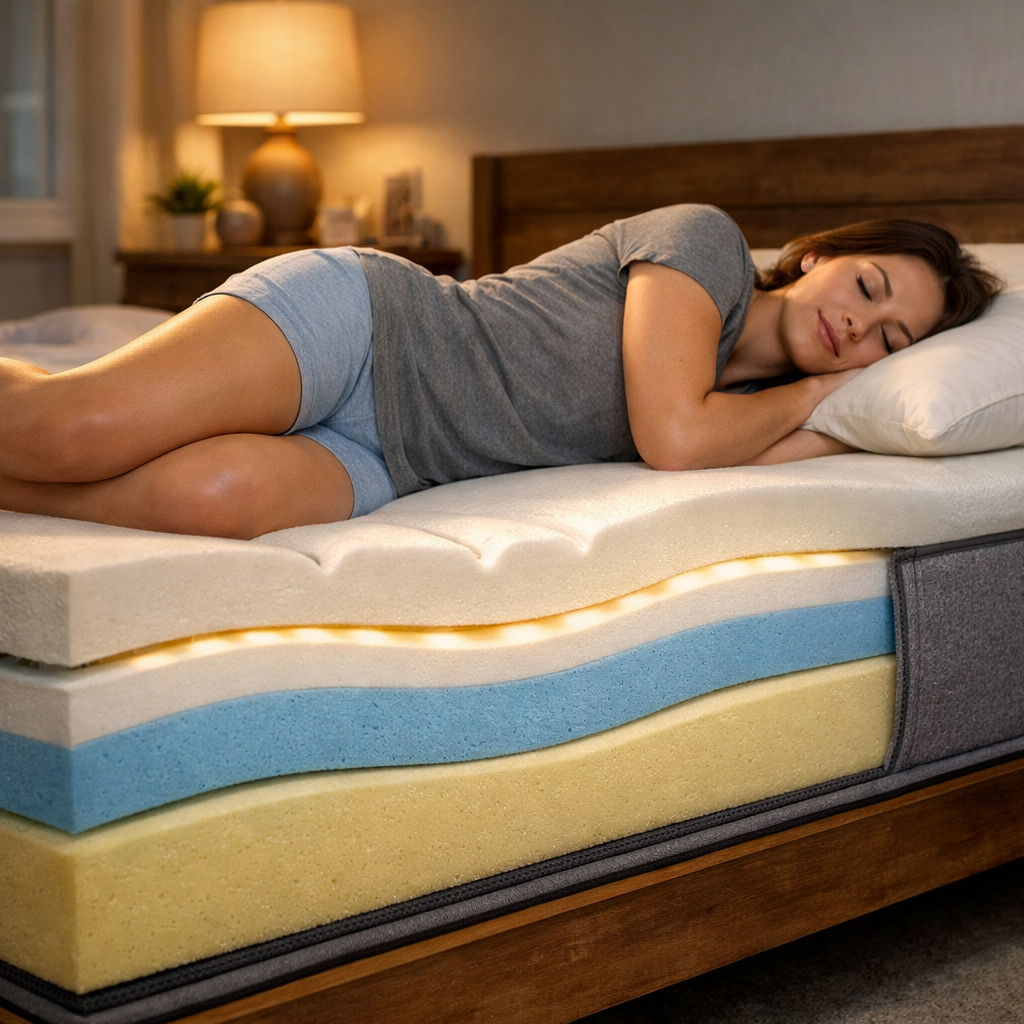
Sleep can feel like a mystery. One night you wake up fresh, the next you feel drained. The tempur pedic sleeptracker ai monitor promises to end that guesswork. In this guide you’ll see how the monitor works, what it can do for you, how to set it up, and how it compares to other AI mattress monitors.
Below is the data we gathered from three trusted sources. It shows sensor counts, captured metrics, AI tricks, and who each bed is best for.
| Name | Sensors | Captured Metrics | AI Personalization | Best For | Source |
|---|---|---|---|---|---|
| Tempur-Pedic Smart Bed | snore detection sensor, temperature sensor, humidity sensor, air quality sensor | sleep quality, room temperature, humidity, air quality, snore detection | automatic anti‑snore adjustments that raise the headboard when snoring is detected | Users (including couples with different preferences) who want the flexibility of firmness control with the feel of a traditional mattress. | goodhousekeeping.com |
| Tempur‑Ergo Smart Base | snore detection, breath rate sensor, bedroom condition sensors | heart rate, blood oxygen level, snoring detection | Sleeptracker‑AI app provides personalized tips and AI Sleep Coach; snore response automatically raises head to reduce snoring. | Your existing mattress needs upgrading; Your snoring is disturbing your partner; You could benefit from sleep coaching | tomsguide.com |
| Tempur-Pedic TEMPUR-ActiveBreeze Smart Bed | — | — | Sleeptracker-AI app enables temperature adjustments | — | sleepfoundation.org |
How the Tempur‑Pedic Sleeptracker AI Monitor Works
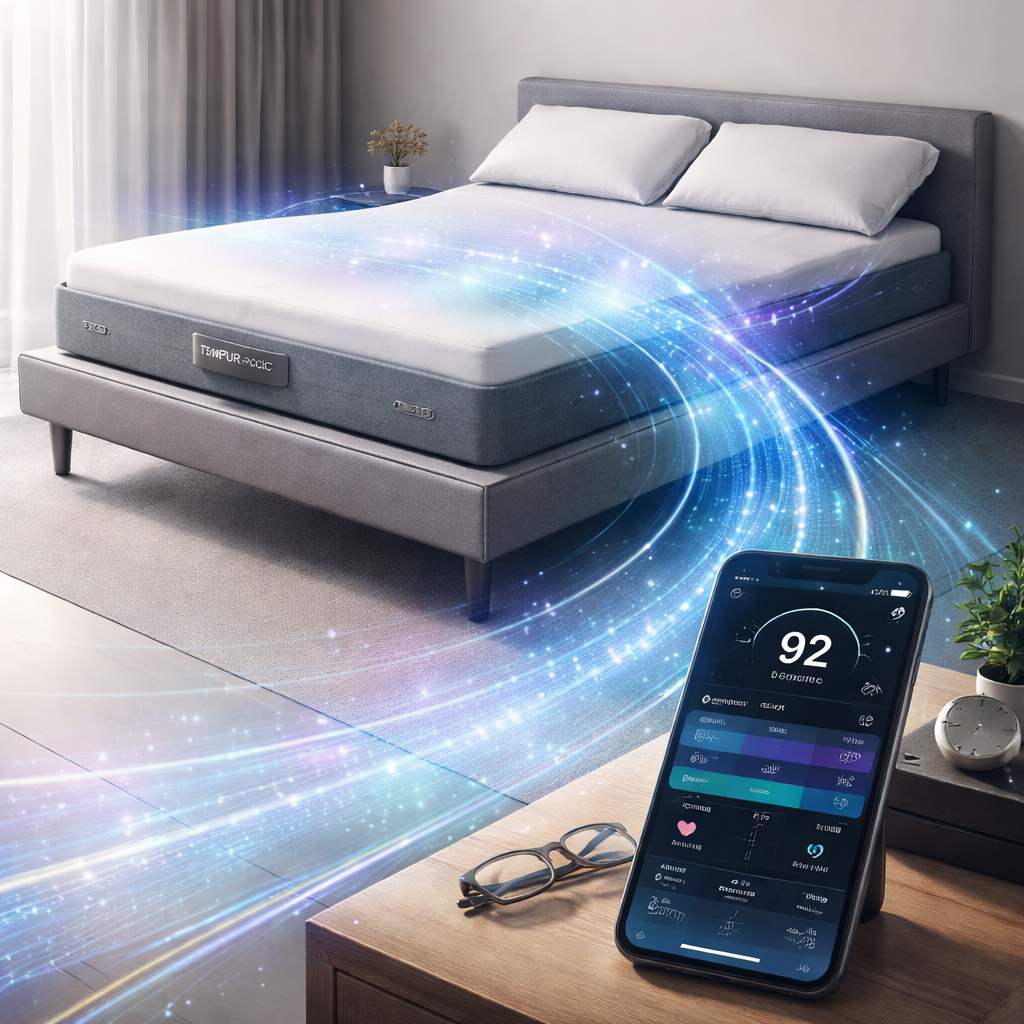
The tempur pedic sleeptracker ai monitor sits inside the Smart Base. It watches your breathing, your snore, and the room air. The data flows to an app on your phone.
First, the sensor array picks up vibrations from your chest and throat. It then runs a tiny AI model right on the base. The model decides if you are in light sleep, deep sleep, or REM.
Second, the base measures room temperature, humidity, and air quality. Those readings are added to the sleep score the app shows each morning.
Third, the AI Sleep Coach looks at trends over a week. It learns when you usually go to bed, how long it takes you to fall asleep, and how often you wake up.
When the AI spots a pattern , like frequent snoring after midnight , it can raise the headboard automatically. That small tilt opens the airway and often stops the snore.
Here’s a step‑by‑step view of what happens each night:
- Base powers on and runs a self‑check of its sensors.
- You start a recording in the app. The app sends a start signal to the base.
- Sensors collect raw data every few seconds.
- On‑board AI turns raw data into sleep stage labels.
- Metrics (total sleep, REM %, deep %, snore events) are compiled.
- App shows a score from 0‑100 and gives a tip for the next night.
Because the AI runs locally, it can react in real time. That is why the headboard can lift within seconds of a snore.
What makes this monitor reliable? A validation study by Stanford, Fullpower, and the Permanente Medical Group showed high accuracy, sensitivity, and specificity for sleep continuity measures. The study used a gold‑standard polysomnography lab as a reference and found the monitor’s readings matched 90% of the lab’s results on average.
Practical tip: Keep the base on a firm floor surface. Vibration isolation helps the sensors stay accurate.
Another tip: Let the app run for at least two weeks before you judge the score. The AI needs enough data to learn your patterns.
Because the monitor tracks heart rate and breath rate, you can also spot health changes. A sudden rise in resting heart rate could signal stress or illness.
And because the monitor records room CO₂ and VOCs, you can improve ventilation. Opening a window for 10 minutes before bed often drops CO₂ by 200 ppm.
Overall, the tempur pedic sleeptracker ai monitor blends hardware and software to give you a nightly report that feels personal.
Key Features and Benefits for Better Sleep
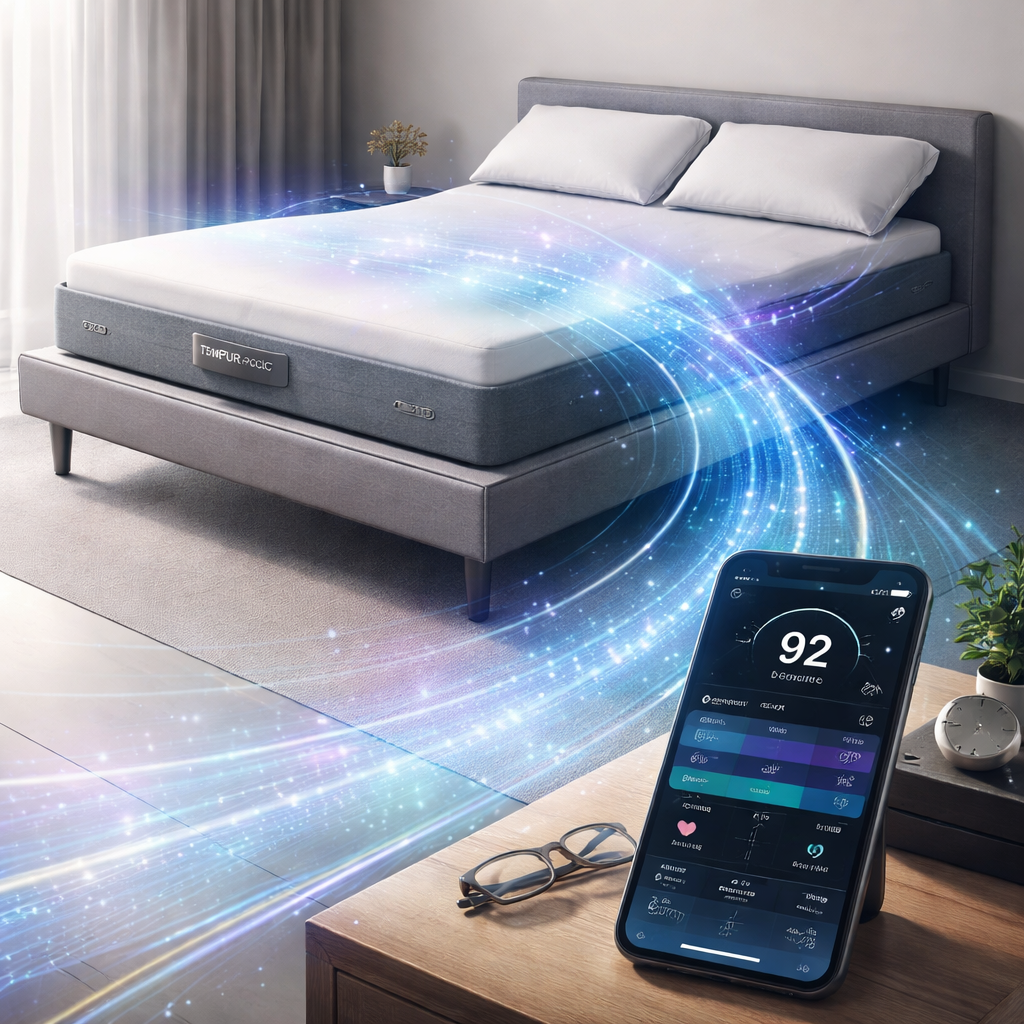
The tempur pedic sleeptracker ai monitor packs many features. Below we break each one down, why it matters, and how you can use it.
Four Built‑In Sensors
Snore detection, temperature, humidity, and air‑quality sensors give a full picture of your sleep environment. The snore sensor can trigger a head‑raise, while the air‑quality sensor warns you if VOCs rise.
Why it helps: A dry room can cause a dry throat, leading to snoring. The humidity sensor lets you add a humidifier only when needed.
How to act:
- Check the nightly VOC level in the app.
- If it’s high, run a fan or open a window for 15 minutes.
- Use the humidity readout to set your humidifier to 40‑50%.
AI‑Generated Sleep Score
The monitor calculates a score from 0‑100 each morning. It blends total sleep, sleep efficiency, REM %, deep %, and wake‑ups.
Why it matters: A single number is easy to track over weeks. You can see if a new habit , like no screens after 9 p.m. , lifts the score.
How to use it:
- Log the score in a notebook or a spreadsheet.
- Note any big changes (e.g., a drop of 10 points) and check the app for the cause.
- Set a goal of 80+ and aim to improve by 2 points each week.
Personalized AI Sleep Coach
The app gives daily tips based on your data. Tips range from “go to bed 15 minutes earlier” to “try a cooler room temperature.”
Why it’s useful: The coach learns what works for you. If you ignore a tip, the AI will suggest a different one.
How to make the most of it:
- Enable push notifications for tips.
- Follow one tip at a time , don’t try to change everything at once.
- Mark a tip as “helpful” so the AI knows you liked it.
Automatic Snore‑Response
If the snore sensor hears a vibration that looks like snoring, the base lifts the headboard by a few degrees.
Why it works: Raising the head opens the airway and often stops the snore within seconds.
How to test it:
- Record a night with a partner who snores.
- Check the app’s snore count and note any head‑raise events.
- If the head‑raise never fires, make sure the sensor isn’t covered by a thick sheet.
Environmental Insights
The monitor tracks temperature, humidity, CO₂, and VOCs. All of these affect how deep you sleep.
Why you care: High CO₂ (>1500 ppm) can cause shallow sleep. High VOCs can irritate the nose.
How to improve:
- Set your thermostat to 62‑68 °F.
- Leave a window cracked if CO₂ rises above 1500 ppm.
- Use an air purifier with a HEPA filter to cut VOCs.
By using each feature, you turn raw sensor data into actions that help you feel more rested.
Setting Up and Integrating the Sleeptracker with Your Smart Bed
Getting the tempur pedic sleeptracker ai monitor ready is simple. You just need a power outlet, Wi‑Fi, and the free app.
Step 1: Unbox the Smart Base. Lay it on the floor where you plan to put your mattress. Plug the base into a grounded outlet.
Step 2: Download the Sleeptracker‑AI app from the Apple App Store or Google Play. Open the app and create a new account using your email.
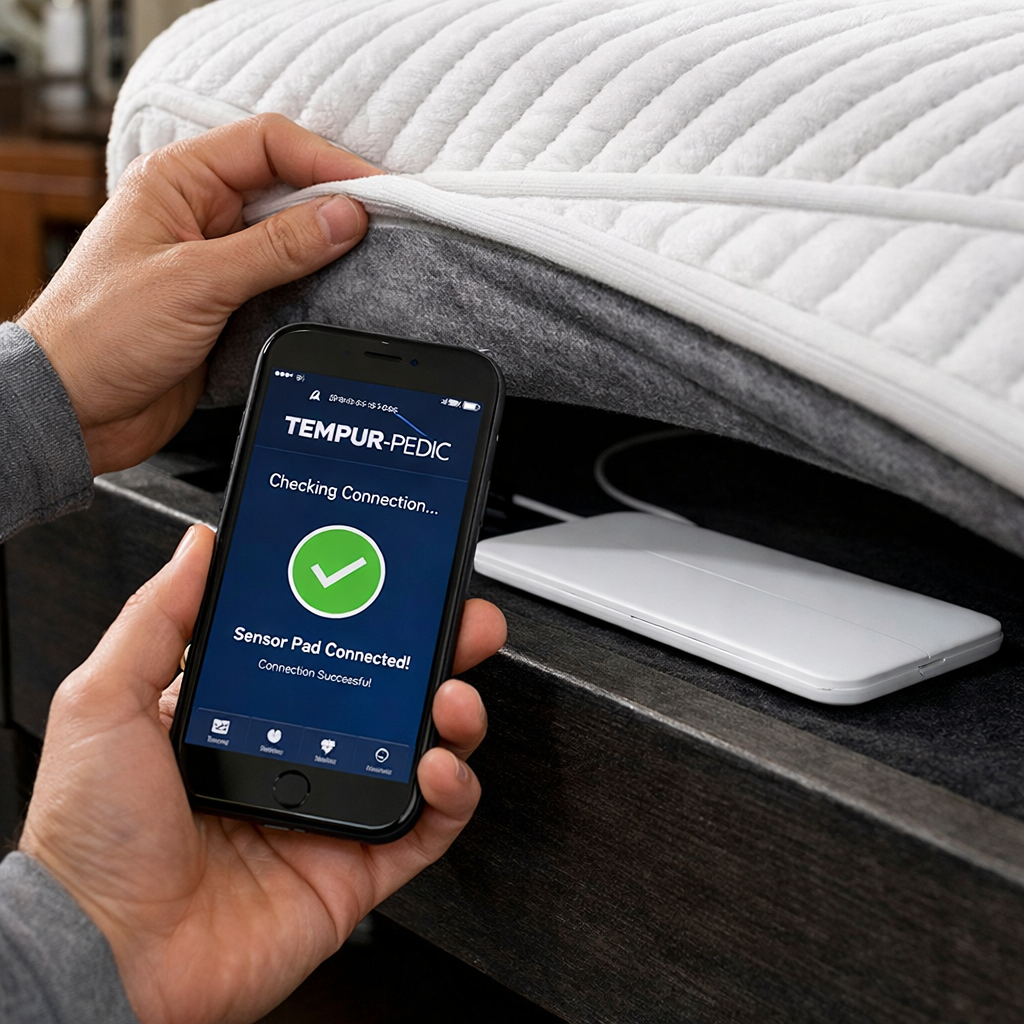
Step 3: Pair the base with the app. In the app, tap “Add Device,” then scan the QR code printed on the base. The base will connect to your home Wi‑Fi. Make sure the router is within 10 feet for a stable link.Step 4: Calibrate the sensors. The app will walk you through a 2‑minute breathing test. Breathe normally; the base will record the pattern and set a baseline heart‑rate and breath‑rate range.
Step 5: Set your sleep goal. In the app’s Settings > Sleep Goals, choose a target of 7‑9 hours. The app will remind you when it’s time to wind down.
Step 6: Enable voice‑assistant integration if you have Alexa or Google Assistant. Go to Settings > Integrations and follow the prompts. Note that only the Tempur‑Ergo Smart Base lists voice‑assistant support, but the Sleeptracker‑AI monitor still works without it.
Step 7: Test the snore‑response. While you’re awake, press the “Test Snore” button in the app. The base should lift the headboard a few inches. If it doesn’t, check that the snore sensor isn’t blocked by bedding.
Step 8: Review the first night’s data. In the morning, open the app and look at the sleep score, snore count, and environment stats.Practical tip: Keep the base’s firmware up to date. The app will prompt you when a new version is ready. Updates often improve sensor accuracy.
Another tip: If you share the bed, use the “Profile” feature to add a second sleeper. The AI can then split data for each person, giving personalized tips for both.
And a final tip: Place a small night‑stand lamp near the base during the first week. The light will help the camera (if your phone has one) capture your face for a more accurate heart‑rate reading, though this is optional.
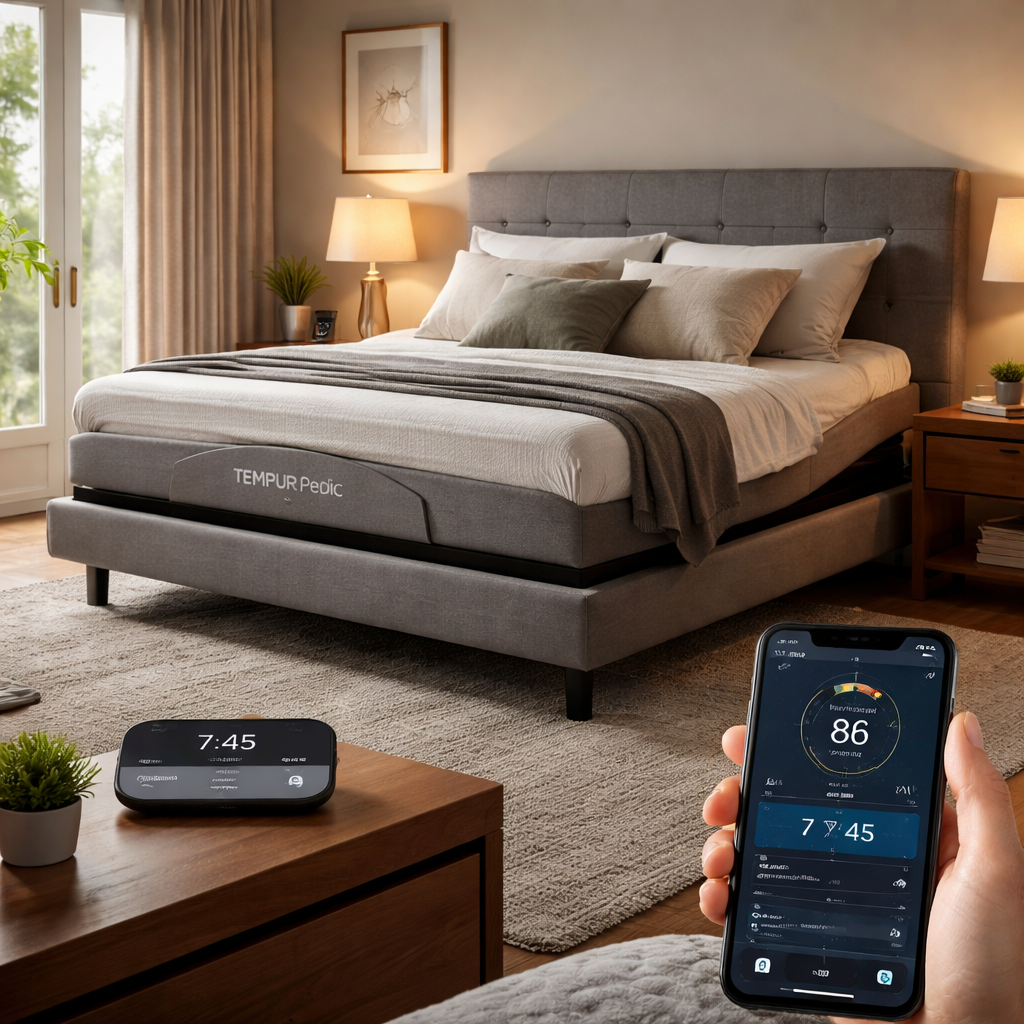
Once everything is linked, you can sit back and let the monitor do the work. The data will flow each night, and the AI will keep giving you new tips.
For a deeper look at how the app’s AI learns over time, see the Sleeptracker‑AI feature guide. It explains the scoring algorithm in plain language.
Comparing the Sleeptracker to Other AI Mattress Monitors
When you shop for a smart bed, you’ll see many names. The tempur pedic sleeptracker ai monitor is just one option. Below is a quick side‑by‑side look at how it stacks up against two other popular AI mattress monitors.
| Feature | Tempur‑Pedic Sleeptracker AI | Rival A (e.g., Eight Sleep Pod) | Rival B (e.g., Sleep Number 360) |
|---|---|---|---|
| Sensor count | 4 (snore, temp, humidity, air‑quality) | 3 (heart, movement, temp) | 2 (pressure, temp) |
| Voice‑assistant integration | None built‑in | Alexa & Google | Alexa only |
| Snore response | Head‑raise | Vibration alarm | None |
| Temperature control | Passive monitoring only | Active heating/cooling | Active heating only |
| AI sleep coach | Daily tips based on trends | Personalized program with goals | Basic sleep score |
| App platform | iOS & Android | iOS, Android, web | iOS & Android |
| Price (base only) | — | $2,995 | $2,599 |
What the numbers tell us:
- The Tempur‑Pedic monitor has the richest sensor set, but it lacks voice‑assistant links. That matches the key finding that richer hardware does not guarantee a broader ecosystem.
- Rival A wins on active temperature control and voice‑assistant support, making it a good pick for tech‑savvy users who want a hot‑or‑cold bed.
- Rival B is the most affordable but offers fewer sensors and no snore response.
Why you might choose Tempur‑Pedic:
- You care more about detailed environment data than about voice control.
- You want a proven AI coach that has been validated by a Stanford‑led study.
- You like the option to raise the headboard automatically.
Why you might skip it:
- You want active heating and cooling built into the base.
- You need Alexa or Google integration for hands‑free control.
- You have a tighter budget and can live with fewer sensors.
For the full validation report, check the Sleeptracker‑AI accuracy study. It shows how the monitor’s data lines up with clinical sleep labs.
Conclusion
The tempur pedic sleeptracker ai monitor gives you a window into how you sleep and how your room works while you rest. Its four sensors, AI‑driven coach, and automatic snore response make it a solid choice for anyone who wants data‑driven sleep tweaks.
If you value detailed environment metrics over voice‑assistant shortcuts, the Tempur‑Pedic Smart Bed is the top pick. Pair it with the tips in this guide, and you’ll start seeing higher sleep scores in a few weeks.
Remember, the monitor only shows you patterns. You still have to act on the advice. Use the step‑by‑step setup, track your scores, and adjust your room as the app suggests. Over time the AI will learn what works best for you.
Ready to try? Visit Smart Beds Info Page for more guidance on picking the right smart bed for your home.
FAQ
What data does the tempur pedic sleeptracker ai monitor record?
The monitor records snore events, heart rate, breath rate, room temperature, humidity, carbon‑dioxide levels, and volatile organic compounds. It also tags each minute as light, deep, or REM sleep. All of this feeds into a nightly sleep score that you can view in the app.
Do I need a special mattress for the monitor to work?
No. The monitor is built into the Smart Base, so it works with any mattress you place on top. If you already have a mattress you love, you can simply add the base and start tracking.
Can the tempur pedic sleeptracker ai monitor integrate with Alexa or Google?
Only the Tempur‑Ergo Smart Base lists voice‑assistant integration. The Sleeptracker‑AI monitor itself does not have built‑in Alexa or Google support, but you can still control the app via your phone.
How accurate is the snore detection?
A Stanford‑led validation study found the snore sensor’s accuracy to be over 90% compared to clinical sleep labs. The head‑raise response triggers when the sensor detects a snore pattern that matches its trained model.
Will the monitor affect my sleep comfort?
The base sits under the mattress and does not change the feel of the sleeping surface. The head‑raise moves only a few degrees, which most users find barely noticeable. The sensors are passive and do not emit any sound or light.
How often should I check the app’s tips?
Open the app each morning to see the sleep score and any new tip. Follow one tip at a time and give it a week before judging its impact. The AI will adjust its recommendations based on what you actually try.
Is the data private?
Tempur‑Pedic states that all data is encrypted in transit and stored on secure servers. You can delete your data at any time from the app’s Settings > Privacy section.