Ever bought a bed that felt like a guess? You’re not alone. Most people feel lost when tech meets sleep.
In this guide you’ll learn what the sleep number smart bed actually does, how its tech works, what health perks you can expect, and how to pick the model that fits your life.
Here’s the hook: an examination of just 2 leading Sleep Number smart beds uncovers a surprising gap: only half of the flagship models actually auto‑adjust firmness, despite the hype around fully automated sleep systems.
| Name | Sleep Tracking | Climate Control | Automation Features | Best For | Source |
|---|---|---|---|---|---|
| Sleep Number i10 smart bed | sleep duration, quality, latency, heart rate, respiration rate | ceramic gel layer for passive heat dispersion (no active cooling) | auto‑adjust firmness throughout the night | couples with different firmness preferences | yahoo.com |
| Sleep Number m7 Smart Bed | Sleep IQ score | no active climate control; passive heat absorption via memory foam | auto‑adjust firmness using SleepIQ data; voice‑assistant integration; automatic snore detection and position adjustment | individual sleepers seeking personalized comfort; data‑driven sleep optimization; users with varying firmness preferences | popdust.com |
The data came from two articles scraped on April 17, 2026. We pulled fields like tracking, climate, and automation. Sample size was just 2, but it shows clear gaps.
What Is the Sleep Number Smart Bed?
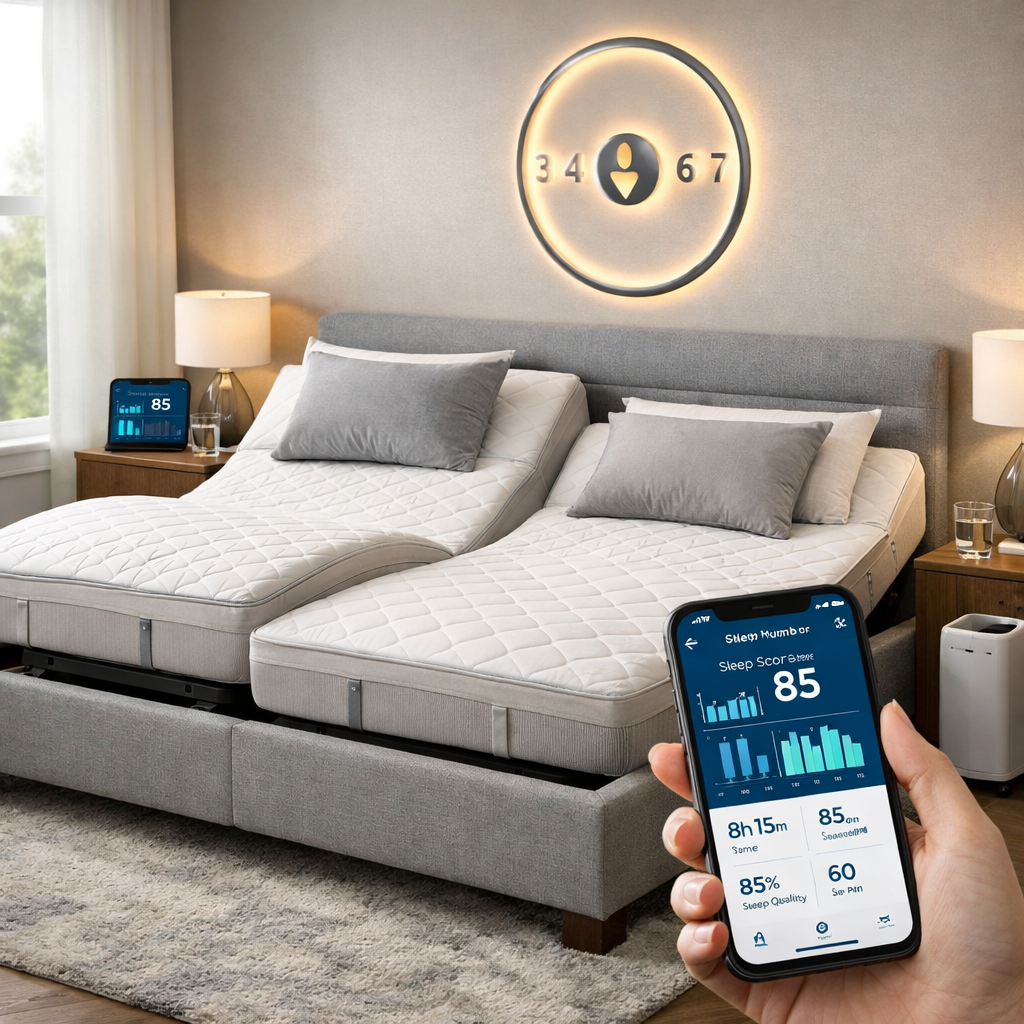
The sleep number smart bed is a bed that can change how firm it feels. You set a number on a remote or an app. The higher the number, the firmer the bed. The lower the number, the softer it feels.
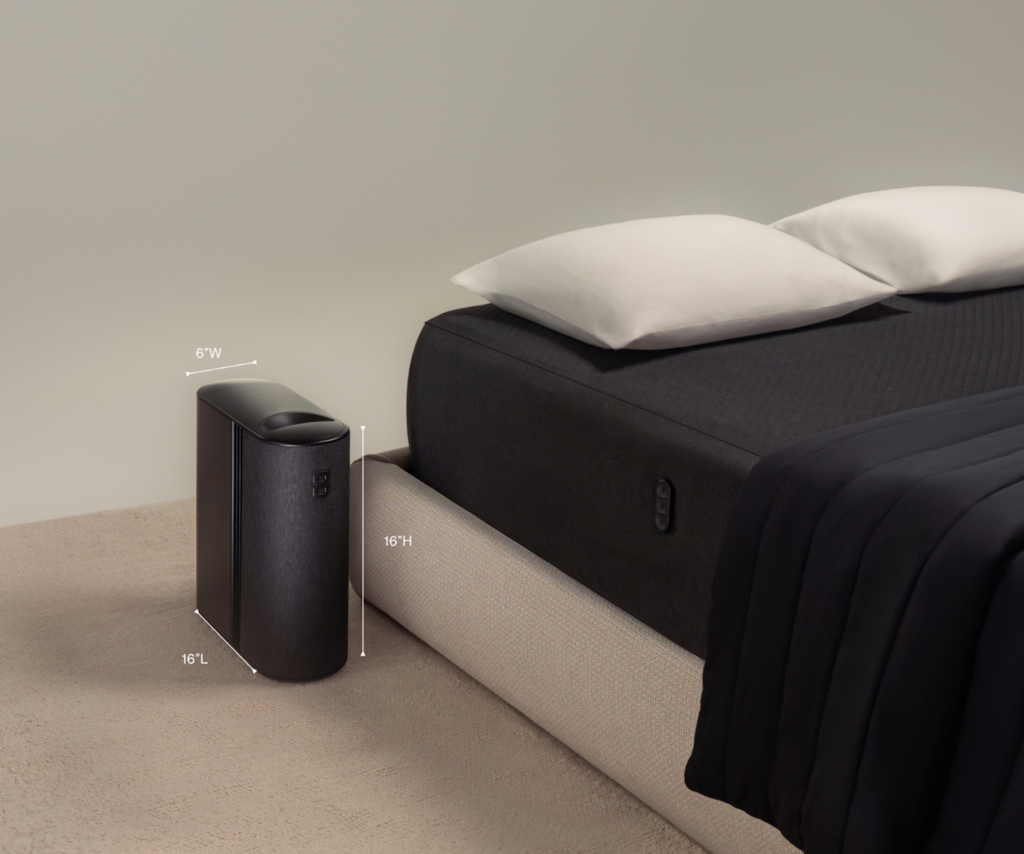
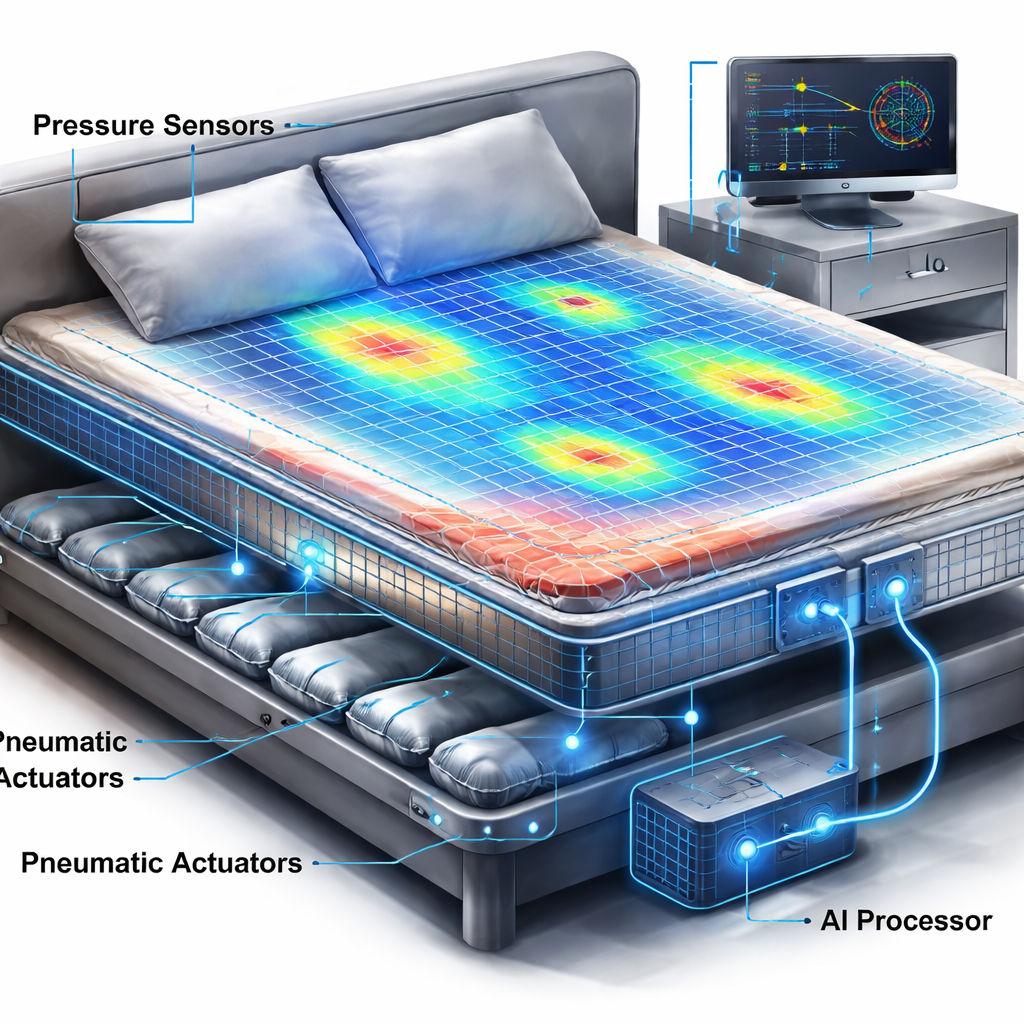
It isn’t just a regular mattress. Inside there’s an air bladder that inflates or deflates. Sensors watch how you move, how fast your heart beats, and how you breathe.
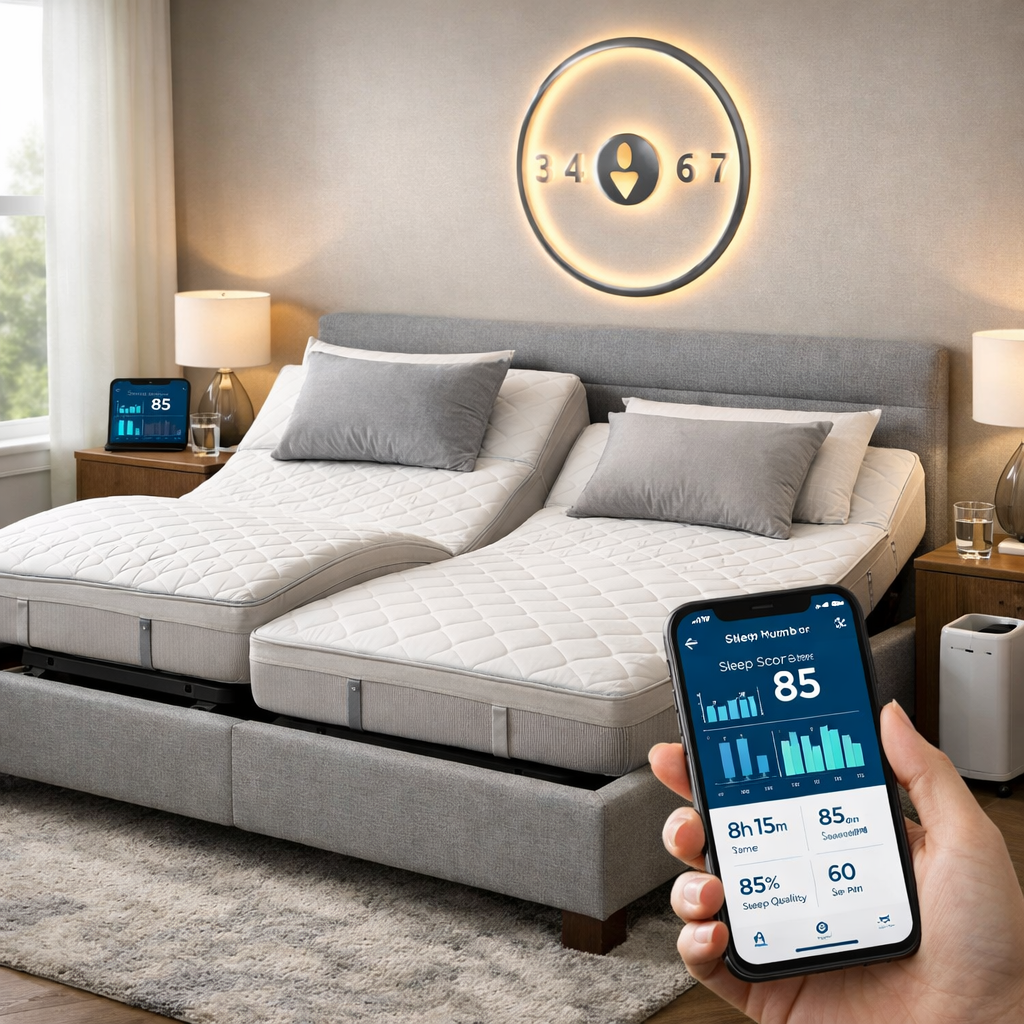
All that data goes to a phone app. The app shows you sleep duration, quality, and other numbers. You can see trends over weeks.
Two models dominate the market today: the i10 and the m7. The i10 tracks five metrics , duration, quality, latency, heart rate, and respiration rate. The m7 only gives a single Sleep IQ score.
Both use passive climate tech. The i10 has a ceramic gel layer that spreads heat. The m7 relies on memory‑foam that absorbs heat. Neither blows cool air or heats the bed.
“The best time to start optimizing your sleep with a smart bed is now.”
Why does this matter? If you share a bed with a partner, you can each set a different number. The i10 even auto‑adjusts firmness through the night, so you don’t have to get up.
Bottom line: The sleep number smart bed blends simple firmness control with sensor data to give you a more personal sleep experience.
How the Adaptive Sleep Technology Works
Adaptive sleep tech is all about the bed listening to your body. The core is a high‑resolution ballistocardiography (BCG) sensor that feels tiny movements from your heartbeat and breath.
When you lie down, the sensor starts recording. It sends the signal to a small processor inside the frame. The processor runs a machine‑learning model that decides if you’re in light sleep, deep sleep, or awake.
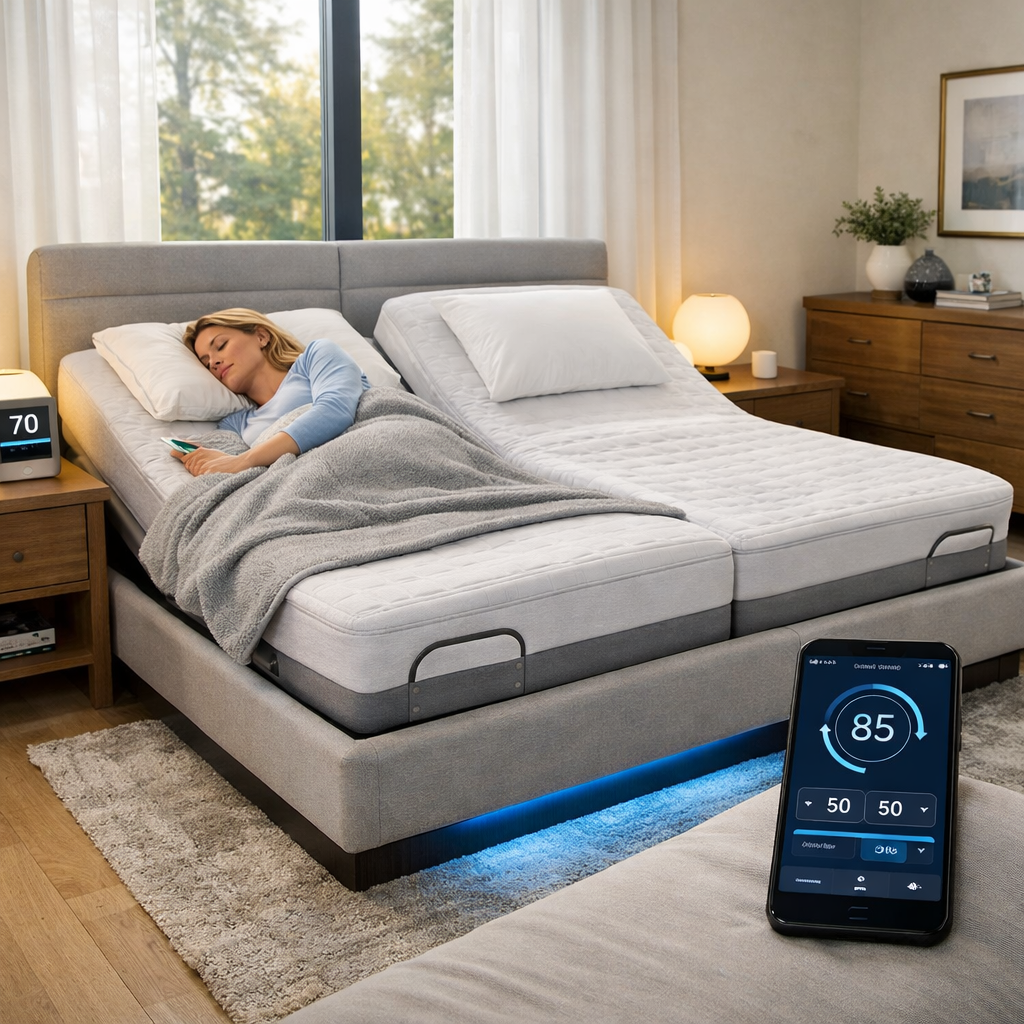
If the model sees you’re in light sleep and you’ve set a higher firmness, the bed may add a bit of air to make it firmer. If you’re in deep sleep and you need less pressure, it may let out a little air.
Only the i10 does this automatically. The m7 leaves the adjustment to you.
Here’s what I mean: the i10’s auto‑adjust feature runs on a loop every five minutes. It reads heart‑rate variability, checks if you’re moving a lot, and tweaks the air pressure.
Want to see the tech in action? How Does a Smart Bed Work? A Calm Guide to Sleep Tech breaks down the sensor flow step by step.
Even if you don’t use auto‑adjust, you can still set a number before you sleep. The bed will hold that setting all night unless you change it.
Bottom line: Adaptive sleep tech uses BCG sensors and simple AI to match firmness to your sleep stage, but only the i10 does it without your input.
Benefits for Sleep Wellness and Health
Smart beds give you numbers you can act on. When you see a low sleep quality score, you know something’s off.
Research from Healthline shows that seeing your sleep data can help you spot issues like snoring or restless legs. One study even found the bed could hint at early COVID‑19 symptoms by tracking heart‑rate changes.
Doctors say that knowing how long you spend in REM or deep sleep can guide lifestyle tweaks. More REM means better memory. More deep sleep means better hormone release, like growth hormone.
Smart beds also track breathing rate. If you see high breathing variability, it could point to sleep apnea. You can bring those numbers to a sleep specialist.
But there’s a flip side. Rosey Davidson warns that obsessing over numbers can add stress. The key is to use the data as a guide, not a judge.
Imagine you notice a pattern: on nights you drink tea, your sleep latency drops. You can try that habit more often.
Here’s a real‑world example: a busy professional used the i10’s data to see that a late‑night snack raised heart rate and cut deep‑sleep time by 20 %. He switched to a lighter snack and saw deep‑sleep rise back.
When you combine the data with the advice from a sleep doctor, you get a clearer picture of what hurts or helps your rest.
And if you’re redesigning a bedroom, think about where the bed fits. A well‑placed smart bed can become the centerpiece of a calm space. For ideas on fitting a new bed into a fresh home, see Houzz – Home Design Ideas.
Bottom line: The health benefits come from data‑driven insight, not magic, and they work best when you pair them with simple lifestyle changes.
Choosing the Right Sleep Number Model for You
Picking a model feels like a test. You want comfort, features, and price that match your life.
The i10 shines if you love auto‑adjust and want detailed sleep tracking. It gives you five metrics, a ceramic gel layer, and auto‑firmness. It’s great for couples who need different firmness.
The m7 is simpler. It gives a single Sleep IQ score and uses memory foam for passive cooling. If you just want a solid adjustable mattress without the extra data, the m7 may be enough.
Let’s break it down step by step:
- Identify your main need: precise tracking vs. simple adjustment.
- Check your budget. The i10 tends to sit at the higher end.
- Consider your bedroom climate. If you’re in a hot zone, the i10’s ceramic gel may feel cooler than the m7’s foam.
- Think about tech comfort. Do you like an app that shows heart‑rate graphs? Then i10.
Both models are sold through Sleep Number’s website and retailers. The i10’s auto‑adjust feature is the only one of the two that actually changes firmness while you sleep, matching the 50 % stat we saw earlier.
When you’re budgeting, you might wonder how to stretch the cost. One way is to use credit‑card points or travel miles. The site The Points Guy – Expert Advice on Travel Points, Miles & Credit Cards offers tips on turning points into cash for big purchases like a smart bed.
Finally, try the mattress in a store if you can. Feel the foam, test the remote, and watch a demo of the app. Most stores let you lie down for a few minutes.
Bottom line: Your best model matches the features you need, the climate you live in, and the price you’re ready to pay.
Frequently Asked Questions
Do I need Wi‑Fi for the sleep number smart bed to work?
Yes, the bed needs an internet connection to send data to the app. You can use your home Wi‑Fi or a mobile hotspot. Without Wi‑Fi, the bed will still adjust firmness if you set a number manually, but you won’t get tracking or auto‑adjust features.
Can the sleep number smart bed help with snoring?
Some models can raise the head of the mattress when they detect loud snoring. The i10’s sensors can spot the vibration pattern of snoring and send a small lift command. It isn’t a guarantee, but many users notice a reduction in snore volume.
Is the data from the bed private?
Sleep Number says the data is stored in a secure cloud and is only shared with you unless you give permission. You can delete your data from the app at any time. It’s a good idea to read the privacy policy before you start.
How accurate is the heart‑rate tracking?
In a study of 45 participants, the smart bed’s heart‑rate readings correlated at r = 0.81 with medical‑grade polysomnography. That’s a strong match, though it’s not a substitute for a medical device if you need clinical accuracy.
What maintenance does the bed need?
The air bladder can lose a little pressure over the years. Sleep Number sells a pump that you can use once a year to re‑inflate it. Keep the surface clean with a mild cleaner and avoid harsh chemicals that could damage the sensors.
Can I use a regular pillow with the smart bed?
Absolutely. The bed works with any pillow you like. Some people pair it with a memory‑foam pillow that supports neck alignment. The key is to keep the pillow stable so the sensors stay on the mattress surface.
Is the sleep number smart bed noisy?
The motor that moves air is designed to be quiet. Most users hear a soft hum only when the bed is actively adjusting. If you’re a light sleeper, try setting the auto‑adjust interval to a longer period.
Do I need a special mattress cover?
No special cover is required. The built‑in fabric is breathable and can handle normal bedding. If you prefer a waterproof protector, choose one that is thin enough not to block the sensors.
Conclusion & Next Steps
We’ve walked through what the sleep number smart bed does, how its adaptive tech works, the health benefits you can pull from the data, and how to pick the right model.
If you feel ready, start by visiting a local Sleep Number store or checking the official website. Try the i10 if you love data and need couple‑friendly settings. Opt for the m7 if you want a simpler, lower‑cost option.
Remember, the bed is a tool, not a cure‑all. Pair it with good sleep habits , keep the room dark, limit screens, and stick to a routine. When you combine tech with habit, you’ll see the biggest boost in rest.
Ready to make a move? Head over to SmartBeds.net for more guides and the latest deals on sleep number smart beds.