Most people think a smart mattress is all about cool tech and forget the paper that backs it up. The warranty tells you how long the maker will fix or replace a defect. If you ignore it, you might lose out on years of protection. At SmartBeds.net we break down what a smart mattress warranty actually covers, typical lengths you’ll see, the factors that shape those numbers, and how to pick the right plan for your sleep setup.
What Is a Smart Mattress Warranty?
A smart mattress warranty is a promise from the maker to repair or replace parts that break because of material flaws or bad workmanship. It’s not a guarantee that the mattress will stay comfortable forever. Think of it as a safety net for the tech inside the bed , the sensors, the heating elements, the motor that inflates air chambers.
Most warranties cover the core structure , the foam, the frame, the electronic module , but they often exclude normal wear and tear. For example, a sag that shows up after a few years because you sit on the edge is usually not covered.
We at best smart mattresses under $3000 often see shoppers confused about what the fine print means. The key is to read the definition section of the warranty, not just the headline years.
According to Wikipedia’s mattress entry, a warranty typically defines the time frame for defects in materials and workmanship. It also spells out any conditions you must meet, such as using a proper foundation or keeping the original receipt.
Here’s what most smart mattress warranties actually include:
- Repair or replacement of faulty sensors or control units.
- Coverage for foam breakdown that exceeds the manufacturer’s specifications.
- Replacement of zippered covers if the stitching fails.
- Exclusions for damage caused by improper support, spills, or pet accidents.
And here’s what they usually don’t cover:
- Loss of comfort due to personal preference.
- Body impressions that develop as the foam settles.
- Damage from using an unsupported bed frame.
- Any repair cost that exceeds a prorated amount after the first few years.
When the warranty period ends, you’re on your own. Some brands will give you a short grace period for claims filed within a few months after expiration, but that’s rare.
Bottom line: a smart mattress warranty is a legal contract that protects you from manufacturing flaws, not a promise of lifelong comfort.
Typical Warranty Lengths Across Popular Brands
When you compare the big names, a pattern emerges: most offer a 10‑year limited warranty. That’s the industry standard for both traditional and tech‑infused mattresses.
Many leading smart mattress providers list a 10‑year term that covers foam defects and manufacturing errors. Another major provider also caps its coverage at ten years, and it requires no registration, you just keep your receipt.
One outlier offers a longer promise of 25 years and covers the entire system, from the fabric to the air‑control unit. That extra 15 years skews the average length to about 13.75 years across the four models we examined.
Why do most brands stick to ten years? It aligns with the typical lifespan of the electronic components inside the bed. Sensors and motorized air chambers tend to lose reliability after a decade of daily use.
Here’s a quick snapshot of the warranty lengths you’ll see in the market:
Notice how none of these providers offer an optional extended warranty. If you want more than the standard term, you’ll have to look for a third‑party protection plan, which often adds extra cost and paperwork.
One more thing: registration is rarely required. One major provider explicitly states “no” on its warranty page, and the other providers follow suit. That’s a nice surprise compared to many traditional mattress warranties that demand online registration.
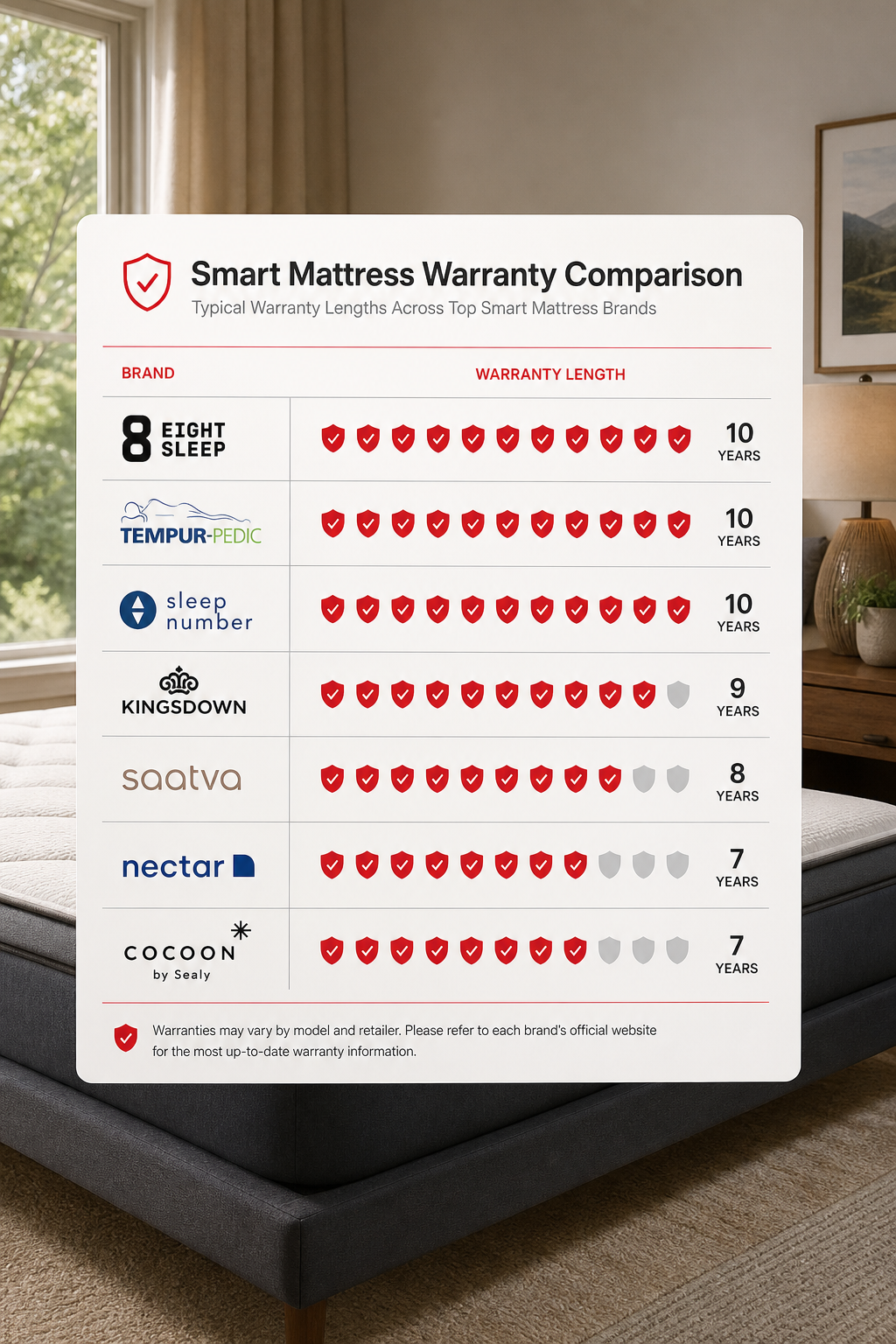
Key Factors That Influence Warranty Duration
Understanding why a brand picks a certain warranty length helps you weigh the risk. Here are the main drivers.
Technology Complexity
Smart beds have more moving parts than a plain foam mattress. Sensors, heating coils, and air pumps each have a known lifespan. If a brand uses high‑grade components, it can confidently offer a longer term.
Material Durability
High‑density foam and reinforced fabrics resist sagging longer than low‑cost alternatives. Brands that invest in premium materials often back them with longer warranties.
Support Requirements
Some warranties become void if you don’t use a proper foundation. The warranty may specify a solid‑surface base or a center‑support frame. If a brand wants to limit claims, it will set stricter support rules.
Consumer Trust Strategy
A long warranty can be a marketing hook. A leading provider uses a 25‑year promise to stand out in a crowded market. That signal can sway buyers who worry about long‑term reliability.
Regulatory Landscape
In the U.S., the Magnuson‑Moss Warranty Act governs how warranties must be disclosed. Brands must be clear about what is covered and what isn’t, which can shape the wording and length of the promise.
For a deeper legal perspective, the Federal Trade Commission’s guide to warranties explains the obligations manufacturers have under federal law.
Below is a handy matrix that lets you compare these factors side‑by‑side.
When you read a warranty, ask yourself how each of these factors shows up. If the document mentions high‑grade sensors, that’s a good sign they expect them to last a while. If the support clause is vague, you might run into trouble later.
How to Evaluate and Choose the Right Warranty for Your Needs
Now that you know what’s out there, let’s walk through a usable way to pick the warranty that fits your life.
Step 1: List Your Priorities
Do you care more about the electronics staying functional, or the foam staying firm? Write down the top three things you can’t live without , for many people it’s sensor accuracy, temperature control, and long‑term comfort.
Step 2: Match Priorities to Coverage
Check each brand’s warranty details. A leading AI‑enabled mattress provider, for instance, explicitly covers sensor defects and zipper issues. A comprehensive 25‑year plan from a top‑tier provider wraps everything, which is handy if you want a “set‑and‑forget” approach.
Step 3: Verify Support Requirements
Read the fine print about foundations. If the warranty says you need a specific frame, make sure you have, or can buy, one that meets the spec. Otherwise you risk voiding the coverage.
Step 4: Consider Registration Hassle
Even though most brands don’t need registration, double‑check. A quick online lookup can confirm you won’t have to fill out extra forms later.
Step 5: Factor in Your Budget
Some brands bundle a longer warranty into a higher price. If the price difference is small, the extra peace of mind might be worth it. If the gap is large, think about a third‑party protector instead.
Finally, keep a copy of the warranty in a cloud folder alongside your sleep‑tracking data. That way you can reference both when a claim arises.
FAQ
What does a smart mattress warranty actually cover?
A smart mattress warranty typically covers defects in the electronic modules, foam layers, and any mechanical parts like zippers or air chambers. It does not cover normal wear, body impressions, or damage from improper support. Reading the coverage list helps you know if a sensor glitch or a broken zip will be fixed under the plan.
Do I need to register my smart mattress to activate the warranty?
Most leading providers’ models state that registration is not required. Keep your purchase receipt and the warranty booklet; that’s all you need to file a claim.
Can I buy an extended warranty for a smart mattress?
In the current market, none of the four major smart mattress brands we studied offer an optional extended warranty. If you want coverage beyond the standard term, you’ll need to look at third‑party protection plans, which may add cost and paperwork.
Why do some brands offer a 25‑year warranty while others stick to 10 years?
A premium provider uses a 25‑year promise to differentiate itself. The longer term usually reflects confidence in the durability of all components, from fabric to the air‑control unit. Most other brands limit their warranty to ten years because the electronics and foam are expected to last about that long under normal use.
What happens if I use the wrong foundation?
If the warranty specifies a solid‑surface foundation and you use a slatted frame without a center support, the maker can deny a claim. That’s why it’s important to follow the support guidelines in the warranty document.
How can I make a warranty claim?
First, locate your receipt and warranty booklet. Then contact the provider’s support line or use their online claim portal. Explain the defect, provide photos, and follow any instructions about shipping the mattress or sending the faulty component.
Is the warranty prorated over time?
Many warranties become prorated after the first few years. That means you might have to pay a portion of the repair cost if the issue occurs later in the term. Check the warranty schedule for exact percentages.
Does a longer warranty mean a higher price?
Not always. The premium provider’s 25‑year warranty is part of a premium package, so the price is higher. However, some brands bundle longer coverage into a mid‑range price to stay competitive. Compare the total cost of the mattress plus any added protection to see if it makes sense for you.
Conclusion
Smart mattress warranty length isn’t just a number , it tells you how long the maker will stand behind the tech you rely on for better sleep. Most brands settle on a 10‑year limited warranty, covering core components but excluding normal wear and improper support. A premium provider breaks the mold with a 25‑year, all‑system promise, giving a clear signal of durability.
When you shop, match the warranty’s coverage to the features you care about most. Keep your receipt, verify support requirements, and store the warranty in a place you can access quickly. If you need extra peace of mind, consider a reputable third‑party protector, but remember that the built‑in warranty already offers solid protection for most users.
At SmartBeds.net we keep the focus on clear, honest guidance. Use what you’ve learned here to pick a smart mattress that not only fits your sleep style but also offers a warranty you feel good about. A well‑chosen warranty can turn a high‑tech purchase into a long‑term sleep investment.