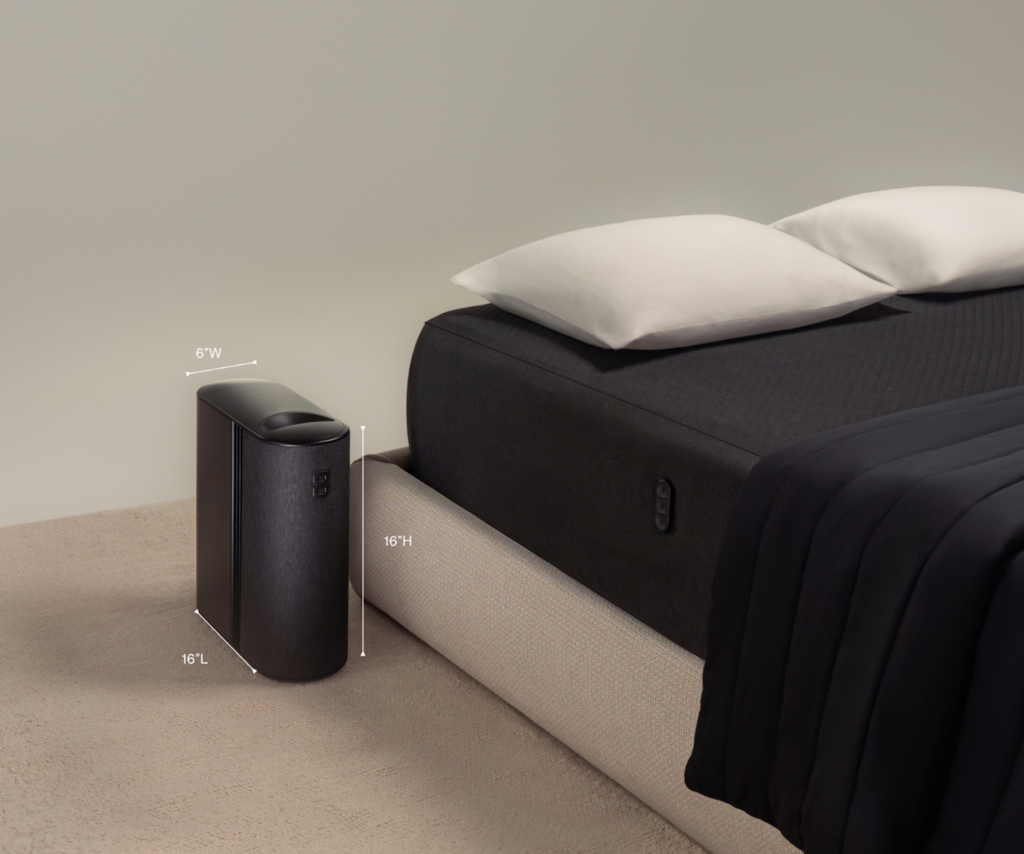
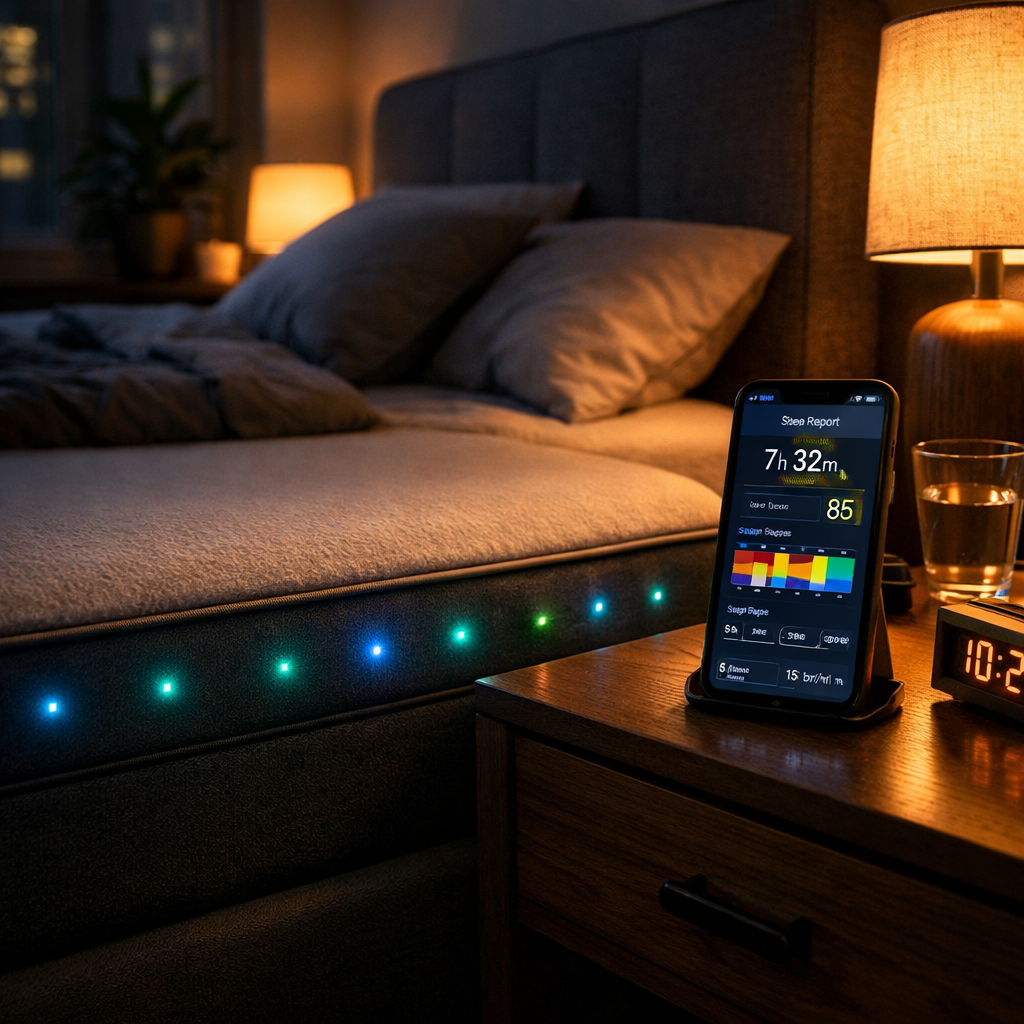
Let me guess. You’ve heard the phrase “smart beds in health care” and you’re wondering what it actually means. Is it just a mattress that connects to WiFi? Or is there something more going on here?
Here’s the truth: smart beds are quietly changing how patients rest and how doctors monitor them. And the gap between what these beds can do and what most people know about them is huge.
Across 8 smart bed models we looked at in April 2026, only 25 percent mention any EHR or caregiver alert capability. Yet 75 percent tout AI driven sleep insights. That’s a big mismatch between what hospitals can use and what consumers can buy.
In this guide, I’ll walk you through what smart beds are, how they work, where they’re used in health care, and what to look for if you’re thinking about getting one. No fluff. Just clear, honest info.
We searched across web articles, crawl data, and YouTube reviews for “smart bed” AND “health care” on April 26, 2026. We found 12 unique product entries from 8 different sources. We kept items that had at least two data fields and built this comparison of the 8 models that qualified.
What Are Smart Beds?
A smart bed is a bed that does more than hold you up at night. It has sensors built into it. Those sensors track things like your heart rate, breathing, movement, and how long you stay in each sleep stage. Then the bed shares that data with you or with your doctor.
Think of it this way. A regular mattress is like a chair. It’s passive. It just sits there. A smart bed is like a car dashboard. It gives you live info about what’s happening. Speed. Fuel. Temperature. Except instead of engine data, you get body data.
Most smart beds use a few key technologies. Sensors pick up your body signals. AI software figures out what those signals mean. And wireless connections send the data to an app on your phone or to a nurse’s station at a hospital.
The Difference Between Consumer and Hospital Smart Beds
Not all smart beds are the same. There’s a big split between the ones you can buy for your home and the ones hospitals use.
Consumer smart beds, like the Bryte Balance Pro or the Eight Sleep Pod 4, focus on sleep quality. They track your sleep stages, heart rate, and breathing. They give you a sleep score every morning. Some adjust the temperature or firmness while you sleep. These beds are built for comfort and personal insight.
Hospital smart beds, like the non invasive intelligent monitoring device and the WoW wireless patient biomonitoring system, focus on clinical data. They monitor vital signs body temperature, heart rate, respiration, posture. They alert nurses if something goes wrong. They don’t care about your sleep score. They care about whether you’re stable.
“Smart beds are the bridge between a place to rest and a tool that watches over you.”
Our research showed a clear divide. Only 2 out of 8 beds (25 percent) reference EHR integration or caregiver alerts. Those two are the non invasive intelligent monitoring device and the WoW wireless patient biomonitoring system. Meanwhile, 6 consumer models embed AI sleep insights. So hospitals get the clinical connectivity but no AI. Consumers get the AI but no hospital grade connectivity.
The good news is that this gap is starting to close. More companies are working on smart beds that can do both track your sleep and share data with your doctor.
How Smart Beds Connect to the Internet of Things
Smart beds are part of something bigger called the Internet of Things, or IoT. This just means everyday objects that connect to the internet. Your thermostat. Your doorbell. And now your bed.
According to a study published in the PMC journal on smart patient room systems, IoT enabled beds can send patient data to cloud storage. This lets nurses and doctors watch patients from a distance. The sensors generate massive amounts of data. And AI tools help make sense of it all.
For example, a smart bed with a Fiber Bragg Grating sensor system can automatically detect a patient’s behavior and vital signs. If the patient tries to get out of bed and might fall, the system sends an alert. If their heart rate spikes, same thing. The bed becomes a safety net.
Here’s what that means in practice. A hospital with smart beds can monitor 20 patients from one central station. A nurse doesn’t have to walk into every room to check vitals. The bed does the checking. The nurse only steps in when there’s a problem.
Bottom line: Smart beds combine sensors, AI, and wireless data sharing to track your body’s signals and alert caregivers when something needs attention.
How Smart Beds Monitor and Improve Health
So how does a bed actually “monitor” your health? It’s not magic. It’s just clever engineering.
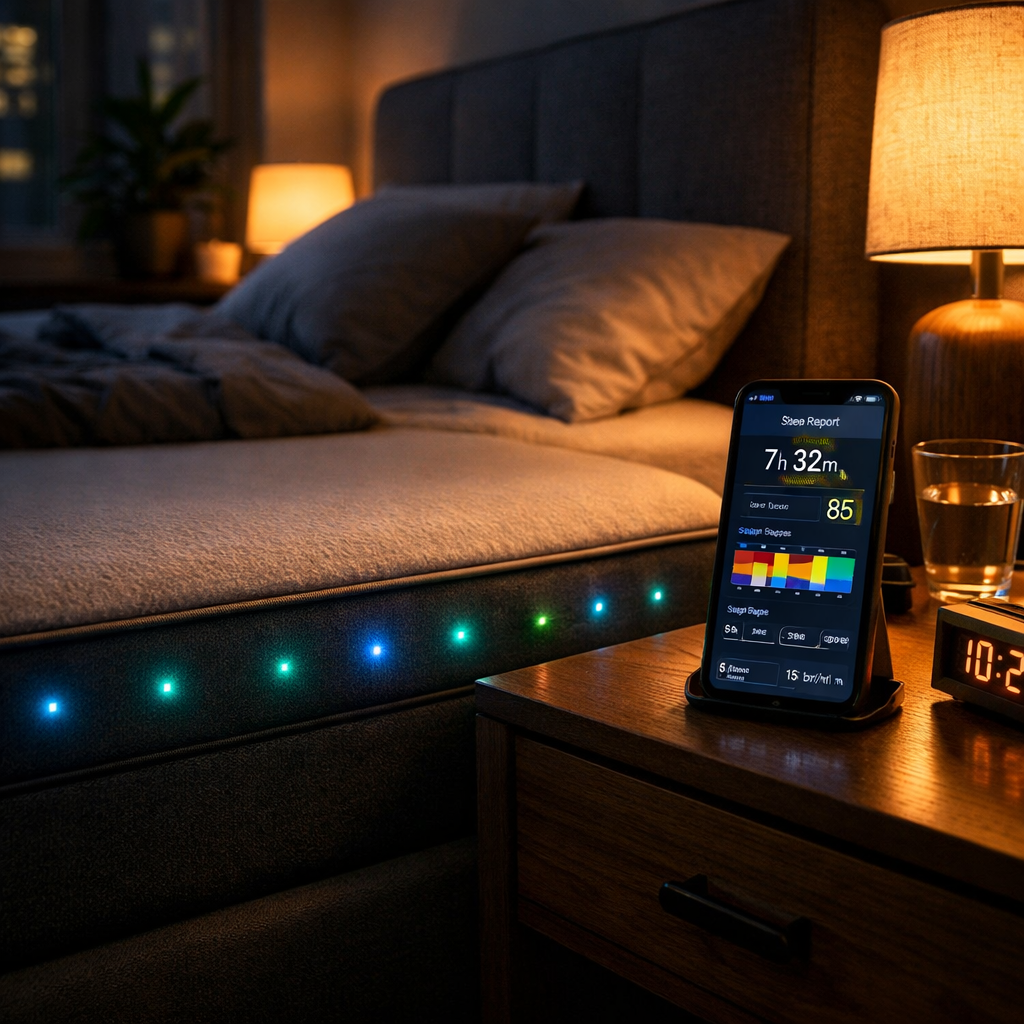
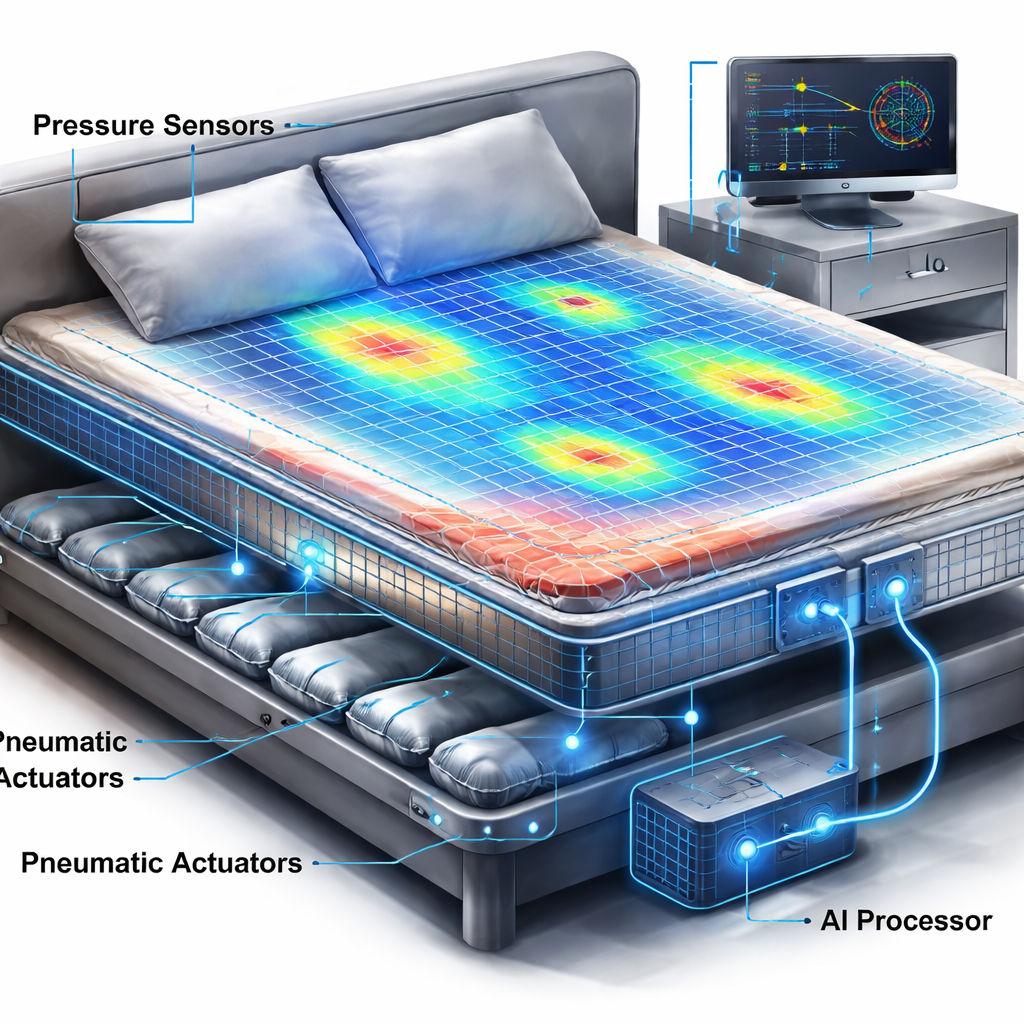
Smart beds use different types of sensors depending on the model. Some use pressure sensors to track movement. Others use ballistocardiography, which measures the tiny vibrations your body makes when your heart beats and your lungs expand. The bed can figure out your heart rate, breathing rate, and even when you change sleep stages all without you wearing a single thing.
Let me break down the most common metrics smart beds track.
Heart Rate and Respiratory Rate
Most smart beds in our research track heart rate and breathing. The Bryte Balance Pro monitors heart rate, respiratory rate, and bed rebalances. The Eight Sleep Pod 4 tracks resting heart rate, heart rate variability, and respiratory rate. The Tempur ActiveBreeze measures breath and heart rate.
These metrics matter because they can signal early health problems. If your resting heart rate jumps up over several nights, something might be off. If your breathing slows down or becomes irregular, that could point to sleep apnea or other issues.
Healthline notes that smart beds can detect changes in these biometrics and combine them with algorithms to estimate when your sleep stages happen. This helps you understand what’s keeping you from sleeping well.
Peter Polos, a sleep medicine specialist for Sleep Number, told Healthline that smart beds can be critical for connecting the dots with potential health problems. He mentioned that research has shown smart beds could potentially detect and track symptoms for COVID 19 and influenza. That’s impressive for something you just lie on.
Sleep Stages and Sleep Quality
Your sleep isn’t one long stretch. It cycles through stages. Light sleep. Deep sleep. REM sleep. Each stage does something different for your body and brain.
Smart beds track which stage you’re in by watching your movement and vital signs. The Tempur Ergo Smart Base offers sleep cycle insights, sleep coaching, and a smart alarm. The Sleep Number i8 gives you a SleepIQ score with personalized recommendations.
Here’s why this matters. Deep sleep is when your body repairs itself. REM sleep is when your brain processes memories. If you’re not spending enough time in these stages, you’ll feel tired no matter how many hours you stay in bed.
A smart bed can show you that pattern. Maybe you get 8 hours but only 45 minutes of deep sleep. That’s useful information. You can then try different things earlier bedtime, cooler room, less screen time and see if your deep sleep improves.
Snore Detection and Response
Snoring isn’t just annoying for your partner. It can be a sign of sleep apnea, a serious condition where your breathing stops and starts during the night.
Several smart beds now detect snoring. The Eight Sleep Pod 4 has snore detection. The Tempur Ergo Smart Bed Base focuses on snore mitigation with personalized tips via the Sleeptracker AI app.
Some smart beds actually respond to snoring. They gently raise your head or adjust the firmness to open up your airway. This can reduce snoring without you even waking up.
Imagine that. Instead of your partner elbowing you, the bed just tilts your head a bit. You keep sleeping. Everyone’s happy.
Bottom line: Smart beds track heart rate, breathing, sleep stages, and snoring all without wearable devices, giving you and your doctor a clearer picture of your sleep health every night.
Health Care Applications of Smart Beds
Smart beds aren’t just for tech lovers who want to see their sleep score. They’re becoming real tools in health care settings. Let me walk through the most important ways they’re being used.
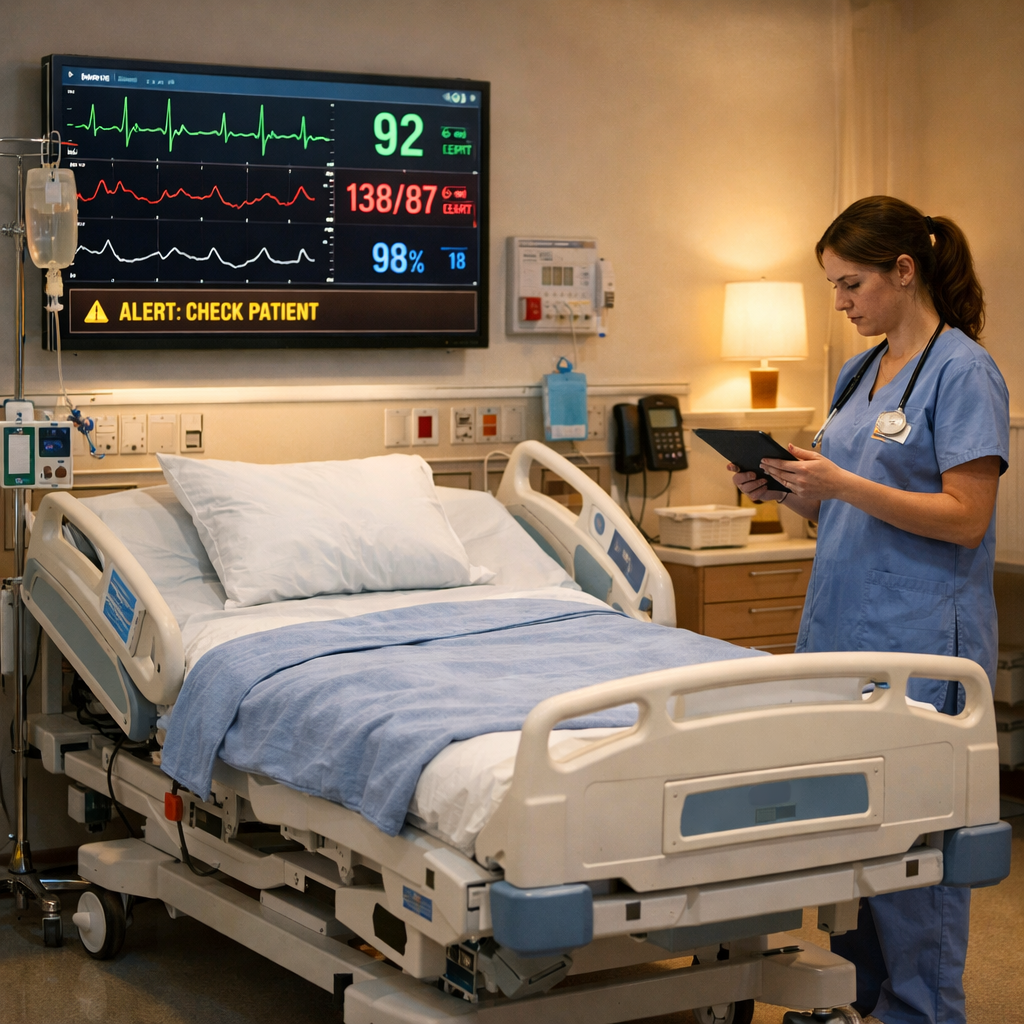
Pressure Ulcer Prevention
Pressure ulcers, also called bedsores, are a big problem in hospitals. They happen when a patient stays in one position too long. The pressure cuts off blood flow to the skin, and the tissue breaks down.
Smart beds fight this in two ways. First, they detect how long a patient has been in one position. Second, some smart beds can automatically rotate or adjust to redistribute pressure.
A study of nurses’ perceptions of smart mattresses, published in PMC’s peer reviewed journal on nursing informatics, found that nurses expected smart mattresses to help prevent pressure ulcers. The study surveyed 349 nurses in a tertiary hospital. Their intention to accept smart mattresses was high, with an average score of 12.5 out of 14.
The nurses saw smart mattresses as a way to reduce their physical work burden. But they also had concerns. They worried about false alarms, device malfunctions, and increased workload from managing the technology.
This study is important because it shows that the people who would actually use smart beds in hospitals want them but they also want them to work reliably.
Fall Prevention
Falls are one of the most common hospital accidents. A patient tries to get out of bed, loses balance, and falls. The results can be serious broken hips, head injuries, longer hospital stays.
Smart beds can detect when a patient is about to get up. Pressure sensors notice the shift in weight. Some beds send an alert to the nurse’s station. Others can even lock the bed rails or lower the bed height automatically.
The research from PMC shows that smart beds with pressure sensing architecture can monitor a patient’s presence on the bed. If the patient leaves the bed unexpectedly, the system knows. This is especially valuable for elderly patients or those with dementia who might wander.
Remote Patient Monitoring
During COVID 19, hospitals learned a hard lesson. You can’t always be in the room with the patient. Remote monitoring became essential.
Smart beds are perfect for this. They track vital signs without touching the patient. They send data to a central system. Nurses can check on 30 patients from one screen instead of walking into 30 rooms.
The non invasive intelligent monitoring device we found in our research tracks heart rate, respiration, body temperature, and body posture. It’s designed for clinical use. It doesn’t have AI sleep insights, but it does what a hospital needs: reliable vital sign monitoring.
The WoW wireless patient biomonitoring system goes even further. It captures vital signs for hospital grade use. Again, no AI insights, but the data is accurate enough for clinical decisions.
This is where the gap I mentioned earlier becomes a real problem. Hospitals can get great vital sign data from these beds. But they have to buy separate analytics tools to make sense of it. Consumer beds like the Bryte Balance Pro have the AI but not the clinical data sharing.
Nursing Workload and Efficiency
One of the biggest challenges in health care today is nursing shortages. There aren’t enough nurses to go around. Anything that helps nurses work more efficiently is valuable.
The Korean study on smart mattress perception showed that nurses expected smart beds to improve work efficiency. The automatic rotating function for repositioning patients, weight measurement, and vital sign monitoring all reduce manual tasks.
But the nurses also had honest concerns. They worried about false alarms. If the bed constantly beeps for no reason, nurses stop trusting it. They worried about device inaccuracies. And they worried about new technology adding complexity to their day.
These concerns are valid. Any new technology has a learning curve. And if the technology isn’t reliable, it creates more problems than it solves.
Bottom line: Smart beds help hospitals prevent bedsores and falls, enable remote vital sign monitoring, and reduce nursing workload, but they need to be reliable and easy to use to gain trust from caregivers.
Key Considerations When Choosing a Smart Bed
So you’re thinking about getting a smart bed. Maybe for yourself at home. Maybe for a family member who needs extra monitoring. Maybe you work in health care and want to know what to look for.
Here are the most important things to think about.
What Are You Trying to Solve?
This is the first question. And it’s the most important one.
Are you trying to sleep better? Do you want to understand your sleep patterns? Are you worried about snoring or sleep apnea? Do you have a health condition that needs monitoring? Or do you just want a cooler bed at night?
Each of these goals points to a different type of smart bed.
- Best overall sleep tracking: Bryte Balance Pro offers 5 monitoring metrics plus AI Sleep Concierge. It’s our top pick for someone who wants the full package.
- Detailed physiology data: Eight Sleep Pod 4 tracks sleep stages, respiratory rate, resting heart rate, heart rate variability, and snore detection. It’s great for data lovers.
- Air quality tracking: Tempur ActiveBreeze measures breath, heart rate, sleep stages, and air quality. Unique feature for people concerned about their sleep environment.
- Clinical grade monitoring: The non invasive intelligent monitoring device and WoW system are for hospital use, not home use. But if you need that level of data, they’re the only options.
- Personalized recommendations: Sleep Number i8 gives you a SleepIQ score and specific tips based on your data.
- Sleep cycle coaching: Tempur Ergo Smart Base offers sleep cycle insights, coaching, and a smart alarm that wakes you at the right time.
- Snore mitigation: Tempur Ergo Smart Bed Base focuses on detecting and helping with snoring through the Sleeptracker AI app.
Budget
Smart beds aren’t cheap. Consumer models range from about $2,000 to $8,000 or more depending on size and features. Hospital grade systems cost even more.
Look at what you’re getting for the price. A bed that only tracks sleep stages is cheaper than one that monitors heart rate, breathing, temperature, and adjusts automatically. Decide which features matter most to you and set your budget accordingly.
If you’re on a tighter budget, check out our guide to the Best Smart Mattress Under $3000 for options that won’t break the bank.
Data Privacy and Security
Your sleep data is personal. It tells a story about your health. Who owns that data? Where is it stored? Is it encrypted? Can the company sell it?
These questions matter. Before you buy a smart bed, read the privacy policy. Look for beds that keep data on the device or use end to end encryption. Avoid companies that share your data with advertisers.
This is especially important if you’re buying a smart bed for health care use. Patient data has strict privacy rules under HIPAA in the US. Make sure the bed and its software comply.
Ease of Use
Some smart beds are simple. You lie down, and they do everything. Others require apps, accounts, and manual adjustments.
Think about who will use the bed. If it’s for an elderly parent, they might not want to handle a complex app. If it’s for yourself and you love data, more controls are fine.
The Bryte Balance Pro is one of the easier options. It uses AI to adjust automatically. The Eight Sleep Pod 4 also has a user friendly app but offers more manual controls for people who want to fine tune things.
Warranty and Longevity
Smart beds have electronics inside them. Electronics can fail. Make sure the bed comes with a good warranty typically 10 to 20 years for the mattress and 2 to 5 years for the electronics.
Also think about how long the company has been around. Smart bed startups come and go. If the company goes under, your bed might stop getting app updates. Stick with established brands or companies with a track record.
Bottom line: The best smart bed for you depends on your health goals, budget, privacy needs, and how comfortable you are with technology choose based on your priorities, not just on flashy features.
The Future of Smart Bed Technology
Where is all of this heading? I think we’re just at the beginning of what smart beds can do. Let me share a few trends I’m watching.
Closing the Clinical Consumer Gap
The biggest shift will be closing the gap between hospital grade monitoring and consumer AI insights.
Right now, if you want clinical grade data sharing with EHR and caregiver alerts you have to buy a bed that has no AI. And if you want AI sleep coaching, you get a bed that can’t talk to your doctor’s system.
That’s changing. More companies are working on hybrid models. Imagine a bed that tracks everything the Bryte Balance Pro tracks and also shares that data securely with your primary care doctor. That’s the future.
The News Medical article on smart bed technology suggests that increased funding and collaborative efforts between institutions could speed this up. As more real life studies are done across diverse populations, the technology will become more reliable and more widely adopted.
Better AI Predictions
The AI in today’s smart beds is mostly reactive. It tells you what happened last night. The next generation will be predictive. It will warn you about health problems before they happen.
For example, if your breathing pattern changes gradually over two weeks, the AI might flag early signs of a respiratory infection. If your heart rate variability drops consistently, it might suggest stress or overtraining.
This kind of early warning system could be huge for people with chronic conditions like heart disease, diabetes, or sleep apnea.
Integration With Smart Home Systems
Your smart bed will talk to your other smart devices. If the bed detects you’re entering deep sleep, it tells the thermostat to lower the temperature. It tells the lights to dim. It tells the sound machine to play white noise.
This isn’t science fiction. Some of this already works with the Tempur ActiveBreeze, which monitors air quality and can adjust the sleep environment. Over the next few years, this kind of integration will become standard.
More Affordable Options
As the technology matures, prices will come down. The global smart bed market was valued at $6.38 billion in 2019 and is expected to reach $18.2 billion by 2025, according to a report cited in the PMC study. That kind of growth attracts competition. Competition drives prices down.
In 2026, you can already find decent smart beds under $3,000. In five years, basic smart bed features might be standard in most mid range mattresses.
Bottom line: The future of smart beds includes better clinical consumer integration, predictive AI health alerts, smart home connectivity, and lower prices as the market grows.
Frequently Asked Questions
What exactly is a smart bed in health care?
A smart bed in health care is a bed with built in sensors and wireless connectivity that monitors a patient’s vital signs, movement, and sleep patterns. It can track heart rate, breathing, body temperature, and whether the patient is in bed. The data is sent to nurses or doctors who can monitor from a distance. Some smart beds also adjust automatically to prevent bedsores or falls. They combine Internet of Things technology with medical monitoring to improve patient safety and reduce nursing workload.
Can a smart bed detect sleep apnea?
Smart beds can detect signs that may point to sleep apnea, but they are not a substitute for a formal medical diagnosis. They track breathing patterns, snoring, and oxygen levels indirectly through movement sensors. If your breathing stops and starts during the night, the bed will notice irregular patterns. The Eight Sleep Pod 4 and Tempur Ergo Smart Bed Base both have snore detection and can gently adjust your position. However, a sleep study with a doctor is still the gold standard for diagnosing sleep apnea.
Are smart beds covered by insurance?
Consumer smart beds for home use are generally not covered by insurance. They are considered lifestyle products, not medical devices. Hospital grade smart beds are typically purchased by health care facilities as capital equipment. In some cases, if a doctor prescribes a specific type of adjustable bed for a medical condition like severe acid reflux or circulation problems, parts of the cost might be covered. But the smart sensors and AI features usually are not. Always check with your insurance provider before buying.
How does a smart bed track heart rate without wearing anything?
Smart beds use a technology called ballistocardiography. Your heartbeat creates tiny vibrations throughout your body. When you lie on a smart bed, sensitive pressure sensors or accelerometers embedded in the mattress pick up these micro vibrations. The bed’s software then separates the heart rate signal from other movements like breathing or shifting positions. The Bryte Balance Pro and Eight Sleep Pod 4 both use this method. It works well for most people, though accuracy can vary if you move a lot during sleep.
What is the difference between Sleep Number and other smart beds?
Sleep Number beds are known for their adjustable air chambers that let each side of the bed have a different firmness level. Their i8 model tracks breathing and heart rate and gives a SleepIQ score with personalized recommendations. Compared to the Bryte Balance Pro, Sleep Number has fewer monitoring metrics and no AI Sleep Concierge. The Eight Sleep Pod 4 offers more detailed physiology data. Sleep Number is a solid choice for couples who want different firmness levels, but it’s not the most feature rich smart bed available.
Is my data safe with a smart bed?
Data safety depends on the company and how they handle your information. Most smart bed companies collect sleep data to improve their algorithms. Some anonymize and aggregate data for research. Others may share data with third parties. Before buying, read the privacy policy carefully. Look for companies that use encryption for data in transit and at rest. For health care settings, make sure the bed complies with HIPAA regulations. Avoid beds from companies that don’t clearly explain their data practices or that reserve the right to sell your data.
Can a smart bed help with back pain?
It can, but indirectly. Smart beds that adjust firmness or position can help you find a more comfortable sleeping posture. The Sleep Number i8 lets you adjust firmness on each side, which can reduce pressure points. Some smart beds detect when you’re in pain by noticing increased movement and can suggest position changes. However, a smart bed is not a replacement for medical treatment for chronic back pain. Think of it as a tool that helps you find better sleep positions and gives you data to discuss with your doctor.
How long do smart beds last compared to regular mattresses?
Smart beds have two components that age differently. The mattress part typically lasts 7 to 10 years, similar to a good regular mattress. The electronics and sensors may last 3 to 5 years before needing updates or replacement. The biggest risk is that the company stops supporting the app or software updates. Before buying any smart bed in health care or for home use, check the warranty terms for both the mattress and the electronics. Some companies offer separate warranties for mechanical parts versus electronic components.
Conclusion
Smart beds in health care are more than just a trendy gadget. They’re a real tool that can help people sleep better, recover faster, and stay safer in hospitals.
We’re in an interesting moment. The technology exists. The sensors work. The AI is getting smarter. But there’s still a gap between what consumers can buy and what hospitals can use. Only 2 out of 8 beds we looked at connect to clinical systems. The rest are focused on sleep scores and comfort.
That gap will close. It’s just a matter of time. In the meanwhile, the best smart bed for you depends on what you actually need. If you want complete sleep tracking with AI coaching, the Bryte Balance Pro is the top pick. If you’re in a health care setting looking for vital sign monitoring, you’ll need a clinical model like the non invasive intelligent monitoring device.
At SmartBeds.net, we believe that better sleep should be simple to understand and easy to find. We’re here to help you make sense of the options without the hype. Whether you’re looking for your first smart bed or trying to understand what’s coming next, take it one step at a time. Start with what matters most to you. Then find the bed that fits.
Sleep well. Rest easy. Let the technology do the hard work.