Sleep pain hurts more than a bad night. It can make you cranky, tired, and even hurt your health. If you’ve tried a regular mattress and still wake up sore, you need something smarter. In this guide you’ll see how a smart mattress for pressure relief works, why the tech matters, and which features really make a difference.
We’ll walk through five core benefits, give you step‑by‑step tips, and end with a quick FAQ. By the end you’ll know exactly what to look for and how to pick the best fit for your body and budget.
1. Automatic Pressure Adjustment with AI
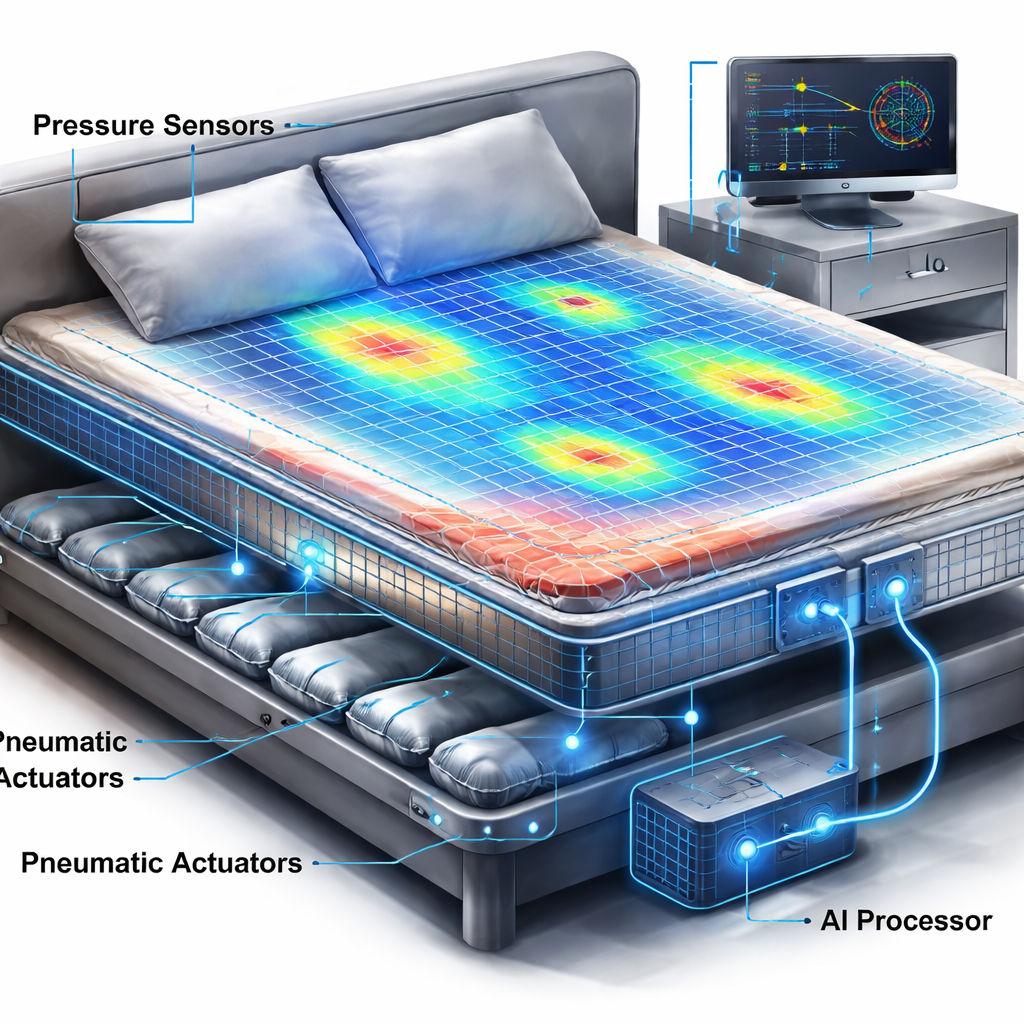
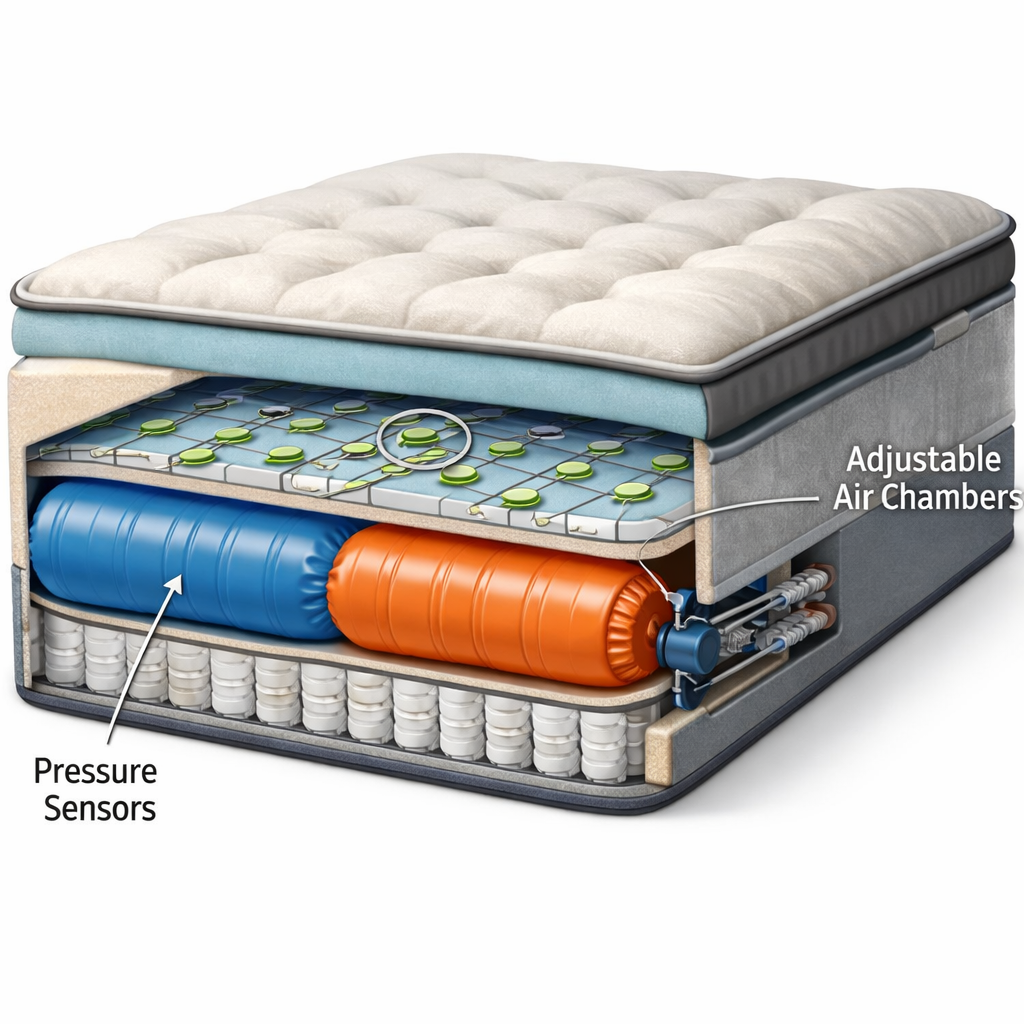
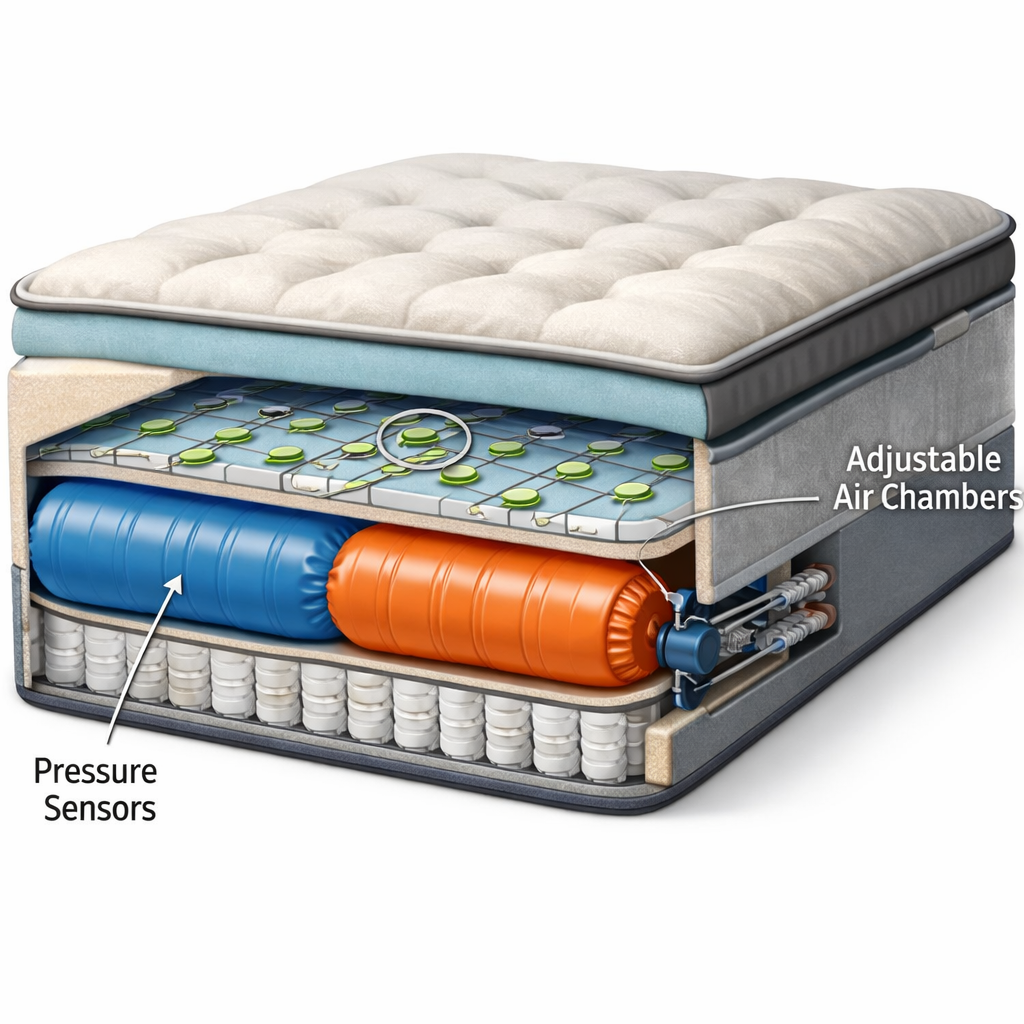
Imagine a mattress that feels the way your body needs it, without you reaching for a remote. That’s what AI‑driven pressure adjustment aims to do. Sensors under the surface read how much weight each part of you is putting on the bed. Then an algorithm decides if any spot is too hard or too soft and instantly inflates or deflates tiny air chambers.
One of the first real‑world tests of this idea happened in Swedish care homes. Researchers placed a mattress with about a thousand pressure sensors under patients. The system flagged high‑pressure zones that could lead to pressure ulcers and sent alerts to staff. The university study showed that early alerts helped nurses turn patients before skin damage set in.
Why does that matter for home sleepers? Because the same sensor data can tell the mattress when you’ve shifted into a new pose. If you roll onto your side, the AI may add a bit more cushion under your hips. If you lie on your back, it may firm up the lumbar area. The result is a constantly‑tuned surface that keeps pressure points low all night.
Here’s how you can make the most of this feature:
- Start with the manufacturer’s recommended baseline firmness.
- Sleep for a week and let the AI learn your patterns.
- Use the app to view pressure maps and tweak zones you feel need extra support.
Many consumers worry that AI sounds complex. In practice it’s just a set of tiny sensors and a simple app. You don’t need a tech degree to use it.
Pressure‑relief tech isn’t all about air chambers. Some foam models use smart layers that change stiffness based on temperature, but the data shows air‑chamber systems dominate the market. Wikipedia notes that even a small reduction in pressure can cut ulcer risk dramatically.
Bottom line:Automatic AI pressure adjustment means the mattress constantly reshapes itself to match your body, so you stay comfy and safe.
2. Real-Time Sleep Tracking and Feedback
While you snooze, a smart mattress for pressure relief can also watch how you move. It uses tiny accelerometers to spot which way you’re lying. A recent paper built a low‑cost system with eight triaxial accelerometers and a deep‑learning model that nailed sleep‑posture detection at 98% accuracy. The peer‑reviewed study shows this tech can tell the difference between supine, prone, and side positions.
Why care about posture? Bad posture can strain your spine, raise blood pressure, and even worsen sleep apnea. When the mattress spots a risky pose, it can vibrate gently or adjust firmness to coax you into a healthier alignment.
Here’s a simple workflow you can follow:
- Install the mattress’s companion app and grant sensor access.
- Sleep for three nights while the system builds a baseline.
- Review the nightly report , look for “high‑pressure alerts” and “posture shifts”.
- Adjust the recommended settings or set a gentle vibration cue for the next night.
Real‑time feedback also helps athletes and busy professionals who need to track recovery. If your data shows you spend more than an hour in a slouched position, you can schedule a stretch routine before bed.
Many brands promise sleep tracking, but the depth varies. Some only count toss‑and‑turn, while others give you a full pressure map. Look for a system that shares raw data, not just a summary score.
Keep in mind that tracking works best when the mattress sits on a stable frame. A wobbly base can confuse the sensors.
Bottom line:With accurate posture detection, a smart mattress for pressure relief gives you feedback you can trust and use to sleep healthier.
3. Dual‑Zone Cooling and Temperature Regulation
Heat builds up under the body when you stay in one spot too long. That can make the mattress feel sticky and raise pressure on the hips. Dual‑zone cooling splits the bed into left and right halves, each with its own temperature control. You can set a cooler side for a hot sleeper and a warmer side for a partner who gets cold.
Temperature tech often uses water‑filled coils or gel‑infused foam. The key is how quickly the system reacts. Some mattresses change temperature in under five minutes, which feels like a breeze.
Below is a quick checklist to evaluate cooling features:
One real‑world example comes from a Swedish hospital trial where the cooling mattress kept patients’ skin temperature within a safe range, reducing sweating and improving comfort during long stays.
Temperature regulation also helps with pressure relief. Cooler skin stays more pliable, so the foam or air chambers can conform better without sagging.
Bottom line:A smart mattress with independent cooling zones reduces heat build‑up and supports consistent pressure relief for both sides.
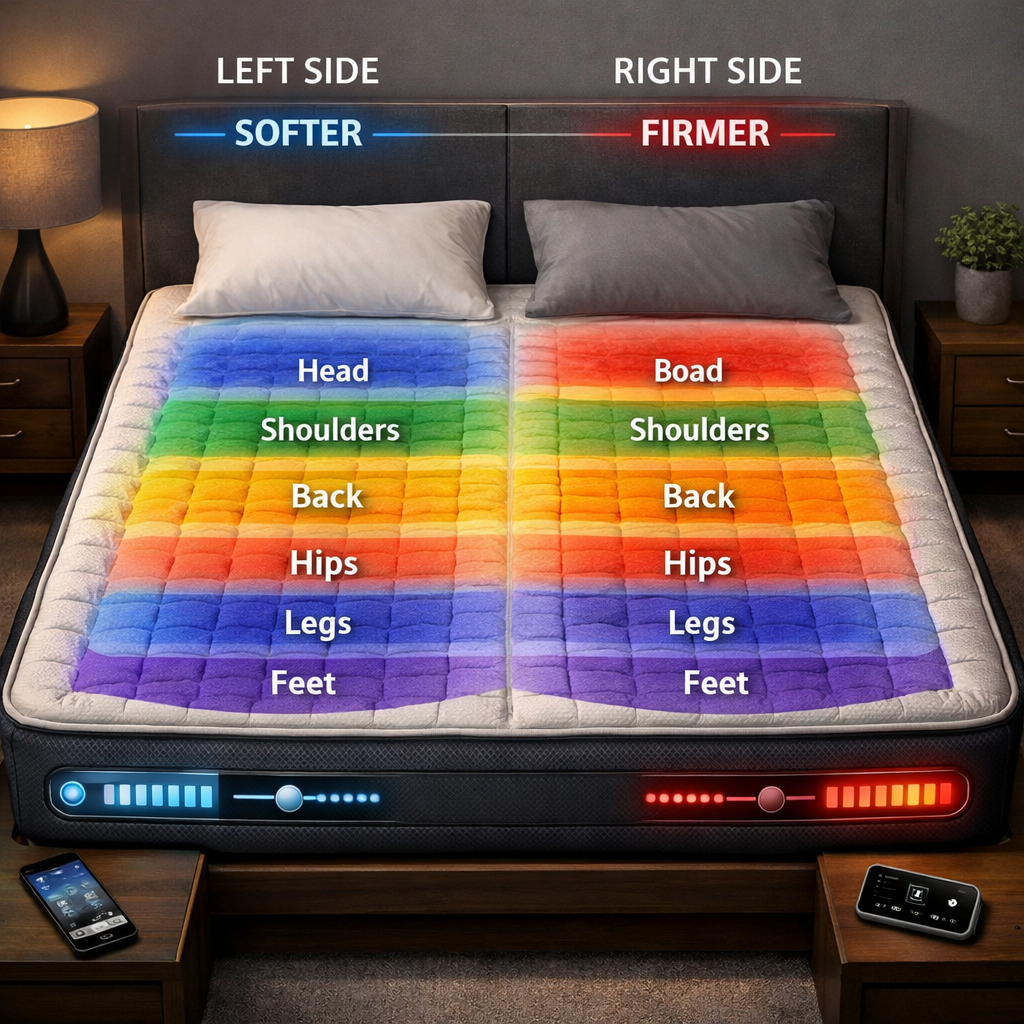
4. Customizable Firmness and Support Zones
Not every body is the same. A side sleeper needs more give under the hips, while a back sleeper craves a firmer lumbar area. Customizable zones let you set firmness per region , often via a mobile app or remote.
Most air‑chamber models split the mattress into 4‑8 zones. The user can raise or lower the pressure in each zone by a few percent. Foam‑based smart beds may use variable‑density layers that shift under electric charge.
Here’s a step‑by‑step guide to fine‑tune zones:
- Lay on the bed in your usual position.
- Open the app and select “Zone Settings”.
- Start with the default profile, then adjust the hip zone a notch softer if you feel a dip.
- Sleep a night, then check the pressure map. If the hip area still shows red spots, lower firmness again.
- Repeat until the map shows an even color spread.
This trial‑and‑error process is easier than buying a new mattress every few years.
One study of a 90‑chamber air mattress showed that even with many zones, users still missed out on app integration. That means the hardware alone isn’t enough , a good UI matters.
For couples, the ability to set each side separately is a game changer. One partner can stay firm for spinal support while the other stays plush for hip relief.
Bottom line:Custom zones give you the power to craft a mattress that fits your shape, not the other way around.
5. Integration with Smart Home Ecosystems
A smart mattress for pressure relief can do more than just adjust itself. It can talk to the rest of your home. Voice assistants like Alexa or Google Home can change firmness, start a cooling cycle, or pull sleep stats with a simple command.
Good Housekeeping’s recent test of several smart beds found that those with built‑in Wi‑Fi and open APIs connected smoothly to smart lights and thermostats. When the mattress detected you were deep in REM, it dimmed the bedroom lights and set the room temp to a cooler 65°F.
Here’s how to set it up:
- Plug the mattress’s hub into your Wi‑Fi network.
- Open the companion app and enable “Smart Home” mode.
- Link the app to your voice assistant using the “Add Device” flow.
- Create routines , e.g., “Good night” turns off lights, lowers temperature, and sets firmness to your night profile.
Integration also means your mattress can share data with health platforms like Apple Health or Google Fit, giving you a full picture of sleep quality alongside steps and heart rate.
When choosing a mattress, look for open standards (Matter, Zigbee) rather than closed‑proprietary clouds. Open standards make future upgrades easier.
Bottom line:Smart‑home integration turns a pressure‑relief mattress into a central hub that syncs comfort, lighting, and health data.
FAQ
What makes a smart mattress different from a regular one?
A smart mattress for pressure relief has built‑in sensors that read how your body presses on the surface. It then uses AI or preset algorithms to change firmness, temperature, or support zones while you sleep. Regular mattresses lack these dynamic adjustments, so they can’t respond to changing pressure points through the night.
Do I need an adjustable base for a smart mattress?
Most air‑chamber models work best on an adjustable base because the base can tilt the mattress to aid circulation and reduce pressure. However, foam‑based smart beds often sit fine on a sturdy platform. Check the manufacturer’s specs before buying.
Can a smart mattress help prevent pressure ulcers?
Yes. The Swedish care‑home study showed that pressure‑sensing mattresses flagged high‑pressure spots early, letting staff turn patients before sores formed. For home users, the same alerts can remind you to shift positions, lowering ulcer risk.
How accurate is sleep‑posture detection?
Recent research using eight accelerometers and a deep‑learning model reached 98% accuracy in classifying six sleep postures. That level of precision means the mattress can give reliable feedback on how you move.
Is the data from my smart mattress private?
Reputable brands store data on encrypted servers and let you delete it at any time. Look for a clear privacy policy and the option to opt out of data sharing before you commit.
Will the mattress make a lot of noise when it adjusts?
High‑quality air‑chamber systems inflate silently, often using silent pumps. Foam‑based models have no moving parts, so they stay quiet. If you’re a light sleeper, read reviews that mention “quiet adjustment”.
How long does a smart mattress last?
Durability depends on the core material. Air‑chamber beds with vulcanized rubber can last 8‑10 years, while high‑density foam typically lasts 7‑9 years. Most brands offer a trial period and a warranty that covers the electronics for at least five years.
Conclusion
Smart mattresses for pressure relief blend sensor data, AI, and home automation to give you a night that feels custom‑made. From automatic pressure tweaks to real‑time posture alerts, dual‑zone cooling, personalized firmness zones, and full smart‑home sync, the technology addresses the root causes of aches and restless sleep.
At SmartBeds.net we’ve sifted through the noise and found that a mattress with solid AI, clear app controls, and open‑source integration offers the best value. If you’ve struggled with pressure points, try a model that lets you see a pressure map and adjust zones yourself. The investment pays off in fewer morning aches, better sleep scores, and a healthier body.
Ready to upgrade? Check out our curated picks and start a risk‑free trial today. Your body will thank you.