Feeling stuck with sleep troubles as you age? You’re not alone. Many seniors find it harder to get comfortable at night. But a new kind of bed is changing that. Smart beds for seniors offer more than just a place to lie down. They lift your head, track your heart rate, and even cool you down.
| Name | Health App Integration | User Interface Type | Weight Capacity | Best For | Source |
|---|---|---|---|---|---|
| Saatva Adjustable Base Plus | Yes | bedside remote | 850 lbs | Best for highest weight capacity (850 lbs) | elderlifefinancial.com |
| DreamCloud Adjustable Bed Frame | Yes | bedside remote | 850 lbs | Best for premium brand remote control | elderlifefinancial.com |
| Nectar Premier Adjustable Base | Yes | mobile app | 750 lbs | Best for mobile app with solid weight (750 lbs) | elderlifefinancial.com |
| Helix Adjustable Base | Yes | bedside remote | 750 lbs | Best for mid‑range weight capacity (750 lbs) with health app | elderlifefinancial.com |
| Nolah LiftEase Adjustable Base | No | voice control (Alexa) | ~650 lbs | Best for Alexa voice control (no health app) | elderlifefinancial.com |
| Tempur-Pedic TEMPUR-Ergo Extend | Yes | mobile app | ~650 lbs | Best for budget‑friendly weight (~650 lbs) with health app | elderlifefinancial.com |
| Nectar Premier Adjustable Bed Frame | No | bedside remote | — | Best for simple bedside remote (no health app needed) | aarp.org |
| TEMPUR-ERGO PRO Smart Base | Yes | mobile app | — | Best for advanced smart features (mobile app) | ncoa.org |
| Sleep Number Adjustable Base | Yes | mobile app | — | Best for customizable firmness (mobile app) | ncoa.org |
I looked at 9 smart beds built for older adults. The results show a clear split. Some beds let you use voice commands but skip health tracking. Others track your sleep but use a simple remote. How do you pick? That’s what this guide is for. We’ll go step by step so you can find the right fit.
Step 1: Assess Your Sleep Needs and Health Goals
Before you shop, think about why you want a smart bed. Do you have back pain? Do you wake up often to use the bathroom? Do you snore? Different models target different problems. For example, the NCOA explains that adjustable beds can help with sleep apnea, acid reflux, and circulation issues. So start with your health goals.
Make a list of what bothers you most. Is it getting in and out of bed? Then look for a base with strong lift and a wall-hugger design. Is it snoring? Then a bed with an auto-snore response might help. The research table shows that models like the Tempur-Pedic TEMPUR-Ergo Extend have health app integration, which can track your sleep patterns. That data can help you and your doctor make better decisions.
Also, consider your partner. If you share a bed, split designs let each side adjust independently. Smart beds for seniors often come with dual settings. That way, you can sleep at a 30-degree angle while your partner stays flat.
Finally, think about future needs. As you age, mobility might change. A bed with voice control could become a lifesaver. Models like the Nolah LiftEase use Alexa, but they lack health app integration. If you value tracking, go with a mobile app model like the Nectar Premier Adjustable Base.
Bottom line:Your health priorities should guide every feature you choose, from head elevation to sleep tracking.
Step 2: Understand Adjustable Bed Functions
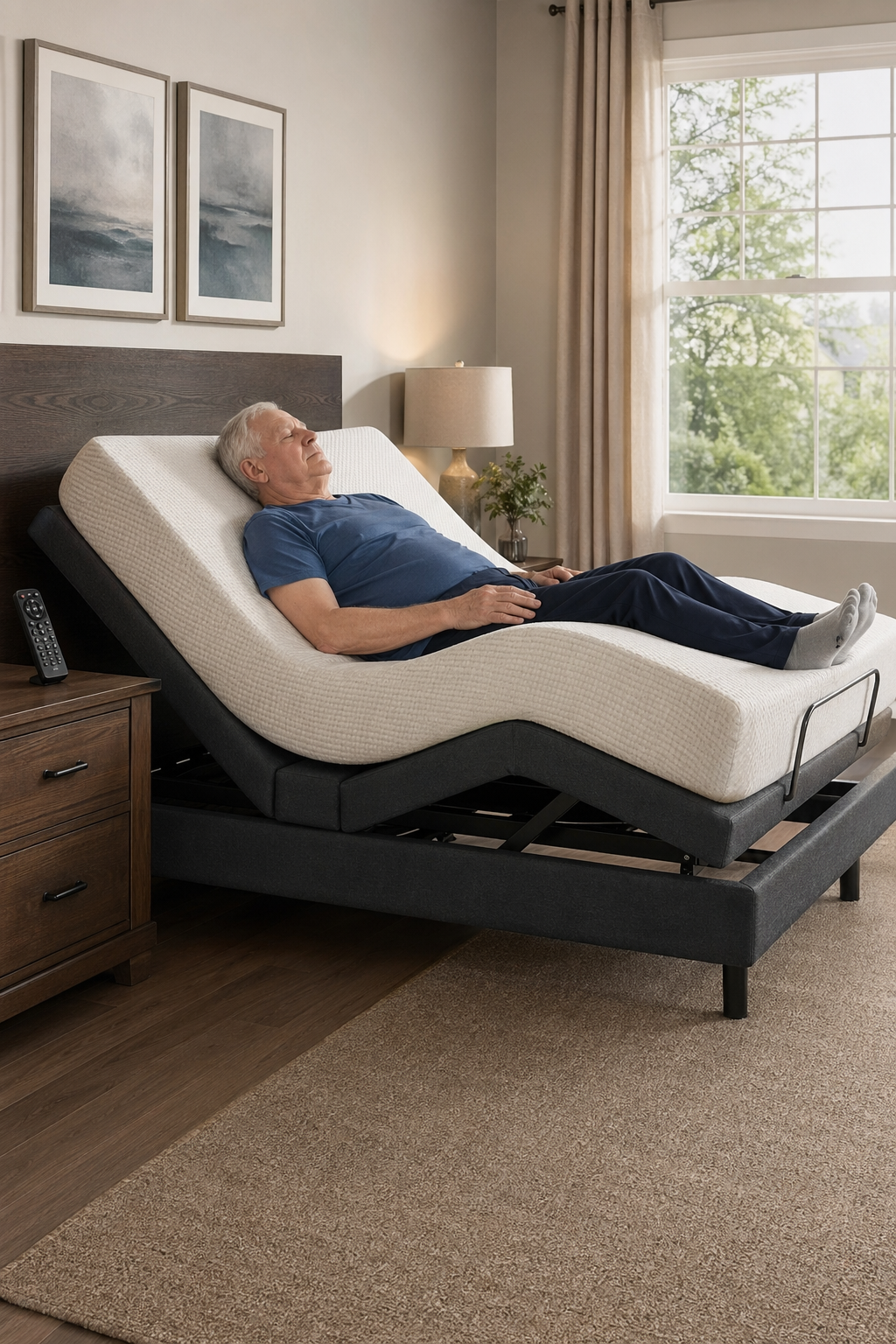
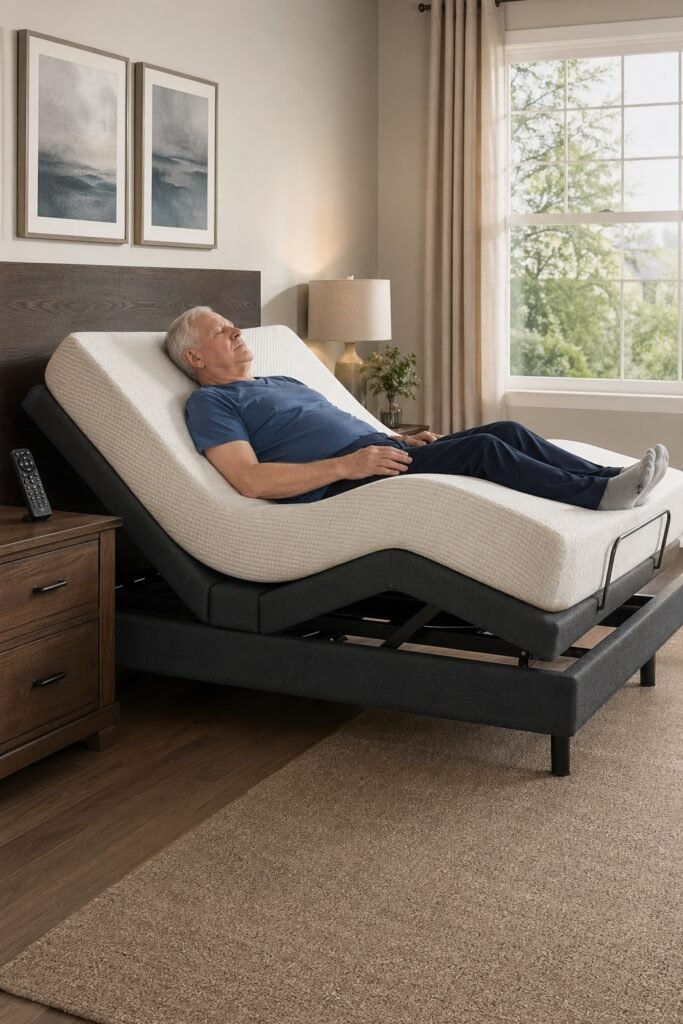
Adjustable beds have been around for decades, but today’s smart beds for seniors pack a lot more power. The basic function is head and foot elevation. You can raise your upper body to watch TV or read. You can lift your legs to reduce swelling. But there are presets too.
Zero gravity is a popular position. It tilts your body so your knees are slightly above your heart. This takes pressure off your spine. Many users find it helps with back pain. Anti-snore mode raises your head just enough to open airways. Massage features can relax tight muscles. The Juna Sleep blog notes that massage can improve circulation and reduce stiffness.
Some bases have wireless remotes. Others use mobile apps or voice control. For seniors, a simple remote with big buttons might be best. But if you’re tech-savvy, an app can give you more data. Our research found that all four beds with mobile app control also have health app integration. That’s a good combo for tracking sleep.
Another feature to know is the memory preset. You can save your favorite position. That’s handy if you like to read in one angle and sleep in another. The Helix Adjustable Base offers three memory presets, which testers loved.
“A bed that remembers your favorite position is like having a butler for your sleep.”
Don’t forget about the massage zones. Some beds let you choose upper, lower, or full body. For seniors with lower back pain, targeting that area can make a difference.
Bottom line:Understand the core functions like head/foot lift, zero gravity, and massage so you can match them to your daily comfort needs.
Step 3: Check Key Hardware and Safety Features
Hardware matters because you’ll use this bed every night. Safety is even more critical for seniors. Let’s look at what to check.
Motor noise and smoothness: A quiet motor won’t wake your partner. The Nectar Premier Adjustable Base operates at 47 decibels (like light rain). That’s excellent. Testers also praised its smooth movement. Jerky motions can aggravate pain, so look for reviews that mention smooth transitions.
Weight capacity: The research table shows capacities from 650 to 850 pounds. If you or your partner are heavier, go for the Saatva or DreamCloud models with 850-pound capacity. They use a bedside remote and offer health app integration.
Wall-hugger design: This keeps your nightstand within reach when the head rises. The Saatva Adjustable Base Plus has this feature. It’s a big plus for limited mobility.
Under-bed lighting and USB ports: Lights help you see at night and prevent falls. Most models in our research have them. USB ports on both sides let you charge devices without reaching far.
| Feature | Why It Matters | Models That Have It |
|---|---|---|
| Wall-Hugger Design | Keeps items close when head is raised | Saatva, DreamCloud |
| Under-Bed Lighting | Prevents falls at night | Nectar, Helix, Saatva |
| USB/ USB-C Ports | Easy charging without moving | Nectar (4 ports), Helix |
| Zero Clearance Design | Fits on platform beds or floor | Nectar, DreamCloud |
The Reverie guide to adjustable beds notes that wall-hugger and quiet motors are top priorities for seniors. Also check the remote. Does it have a flashlight? The Saatva remote does. That’s helpful in the dark.
Bottom line:Hardware and safety features are non-negotiable , focus on quiet motors, wall-hugger designs, and good lighting.
Step 4: Explore Smart Technologies and Sensors
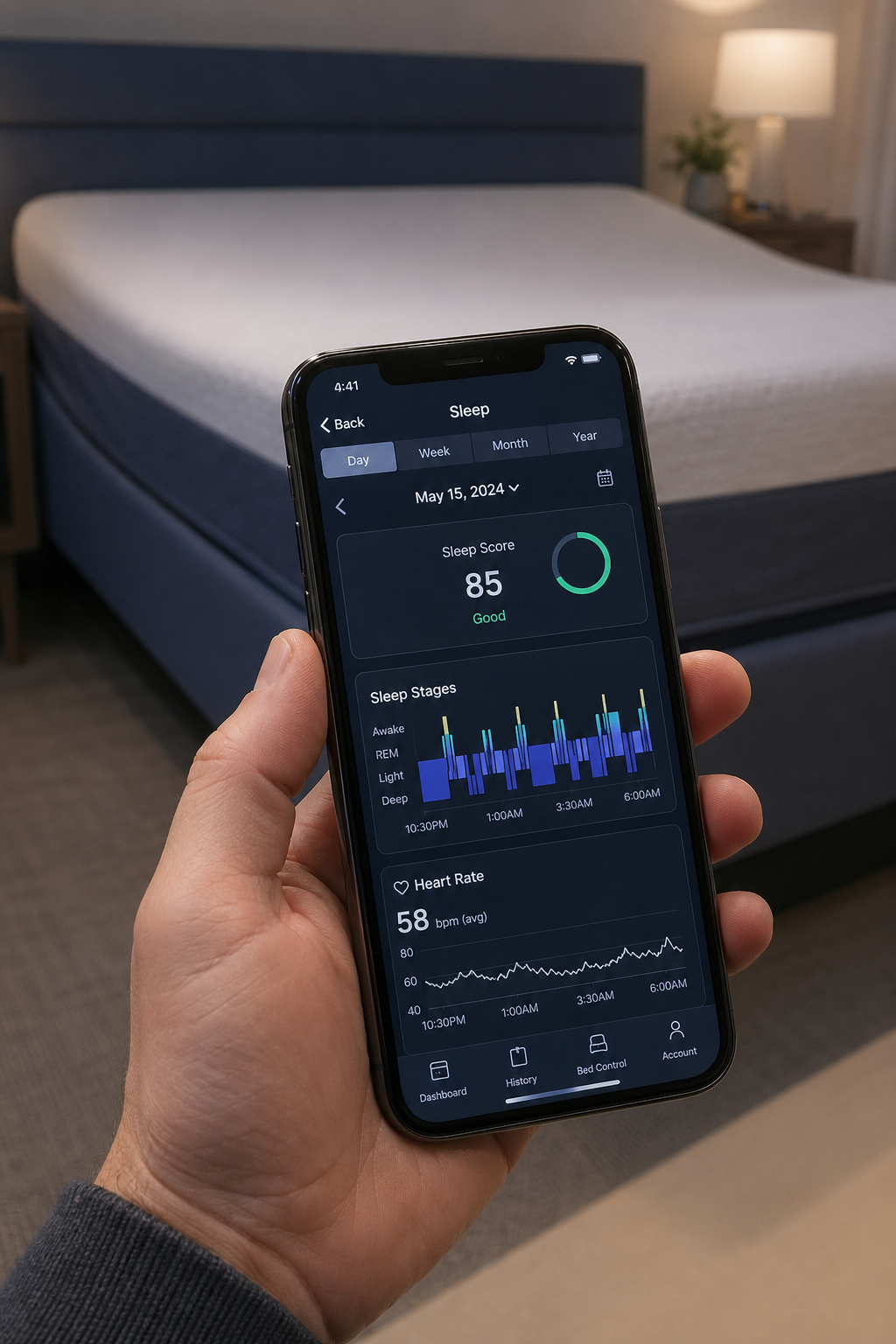
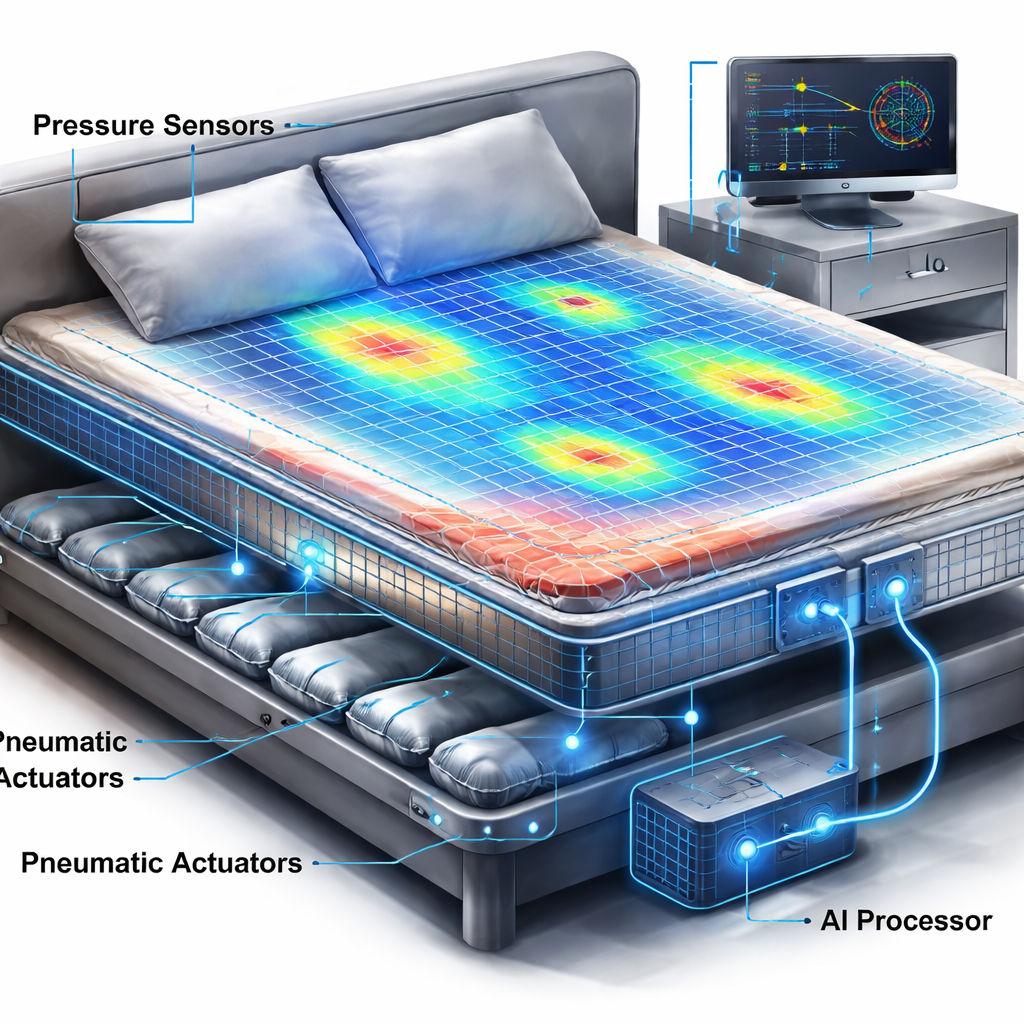
Now for the fun part. Smart beds for seniors can do more than move. They can monitor your health. Sleep tracking sensors measure heart rate, breathing, and movement. The data goes to an app that shows your sleep quality. The Tempur-Pedic TEMPUR-ERGO PRO Smart Base even detects snoring and automatically raises your head.
Health app integration is a major differentiator. Our research found that only models with mobile app control offer this. If you want to share data with your doctor, choose a bed like the Sleep Number Adjustable Base or the Nectar Premier. They sync with health apps.
Voice assistants like Alexa add convenience. But be aware: the two Alexa-only beds in our research (Nolah LiftEase and Nolah Adjustable Base) do not have health app integration. So you have to choose between voice control and health tracking. For many seniors, health tracking is more valuable.
Temperature regulation is another smart feature. Some beds warm up or cool down each side independently. The Sleep Better NY article discusses how temperature control can help people with sleep apnea stay comfortable. That’s a nice bonus.
Firmness adjustment is also common. The Sleep Number bed lets you change the feel from soft to firm on each side. That’s great for couples with different preferences.
Don’t forget about software updates. Some bases can update automatically to fix bugs or add features. That ensures your bed stays current for years.
Bottom line:Smart technologies like sleep tracking and voice control can dramatically improve your sleep health and convenience.
Step 5: Compare Prices, Warranties, and Finalize Your Choice
Now you have a shortlist. Let’s talk money. Smart beds for seniors range from about $750 to $2,000 for a queen size. The Nectar Premier Adjustable Base is often $750 after discounts. The Saatva Adjustable Base Plus is around $1,600. Prices vary by size and features.
Warranties are important. Nectar offers 2 years, Saatva gives 25 years (limited), Helix offers 10 years. A longer warranty usually means better quality. Also check the trial period. Nectar and DreamCloud offer 60-night trials. That lets you test the bed at home.
Delivery matters. Saatva includes free white-glove delivery (they set it up). Nectar charges around $200 for the same service. If you have mobility issues, white-glove is worth the cost.
The NCOA’s adjustable bed guide recommends considering the mattress compatibility. Most smart bases work with memory foam, latex, or hybrid mattresses. Avoid innerspring , they can get damaged.
Final step: make a decision. Write down your top three priorities (e.g., health app, quiet motor, under $1,000). Then see which model checks the most boxes. If you’re still unsure, think about which features you’ll use daily. A quiet motor matters every night. Voice control might be fun but less essential.
For a calming bedtime routine, consider adding a waterless essential oil diffuser. It creates a soothing scent without the mess. This complements your smart bed perfectly.
Bottom line:Compare prices, warranties, and trial periods carefully , your final choice should balance cost with the features that matter most to your health.
Conclusion
Choosing smart beds for seniors doesn’t have to be hard. Start by knowing your health needs. Then learn what each function does. Check the hardware for safety. Explore the smart tech that can track your sleep. Finally, compare prices and warranties to find the best value.
Remember the research: only a few models combine health app integration with mobile app control. If that’s important, go with the Nectar Premier or Sleep Number. If you need high weight capacity, the Saatva and DreamCloud models are solid choices.
Your sleep quality can improve dramatically with the right bed. I’ve seen it happen for so many seniors. Take your time, use the trials, and don’t settle for less than comfortable, safe, and smart.
For more detailed comparisons, s at SmartBeds.net. We’re here to help you rest easy.
Frequently Asked Questions
What is the difference between a smart bed and an adjustable bed?
A smart bed includes sensors and connectivity (Wi-Fi, app) that track sleep and adjust automatically. An adjustable bed only lets you change the head and foot positions manually. Many smart beds for seniors also have health monitoring and voice control.
Can smart beds help with sleep apnea?
Yes. Raising your head opens airways and can reduce snoring. Some smart beds automatically detect snoring and tilt your head. However, smart beds for seniors are not a substitute for a CPAP machine if prescribed by a doctor.
Are smart beds covered by Medicare?
Medicare may cover hospital-grade adjustable beds if deemed medically necessary. But most consumer smart beds for seniors are not covered. Check with your specific Medicare plan for details.
How much weight can a smart bed hold?
Weight capacities range from 650 to 850 pounds. The Saatva and DreamCloud models support up to 850 lbs. Always check the manufacturer’s spec to ensure it’s safe for you and your partner.
Do I need a special mattress for a smart bed base?
Yes. Memory foam, latex, and hybrid mattresses work best. Avoid innerspring mattresses because they can bend and damage the coils. Many brands sell compatible mattresses.
Can I control the bed with my phone?
Many smart beds for seniors come with a mobile app. Models like the Nectar Premier, Tempur-Pedic TEMPUR-Ergo Extend, and Sleep Number Adjustable Base all have app control. This lets you adjust settings, track sleep, and save presets.
What happens if the power goes out?
Most smart beds will return to a flat position if power is lost. Some models have a battery backup or manual crank option. Check the product manual for specifics.
How long do smart beds last?
With proper care, smart beds for seniors can last 10 to 15 years. The motor and electronics are built for daily use. Longer warranties (like Saatva’s 25-year limited) are a good sign of durability.